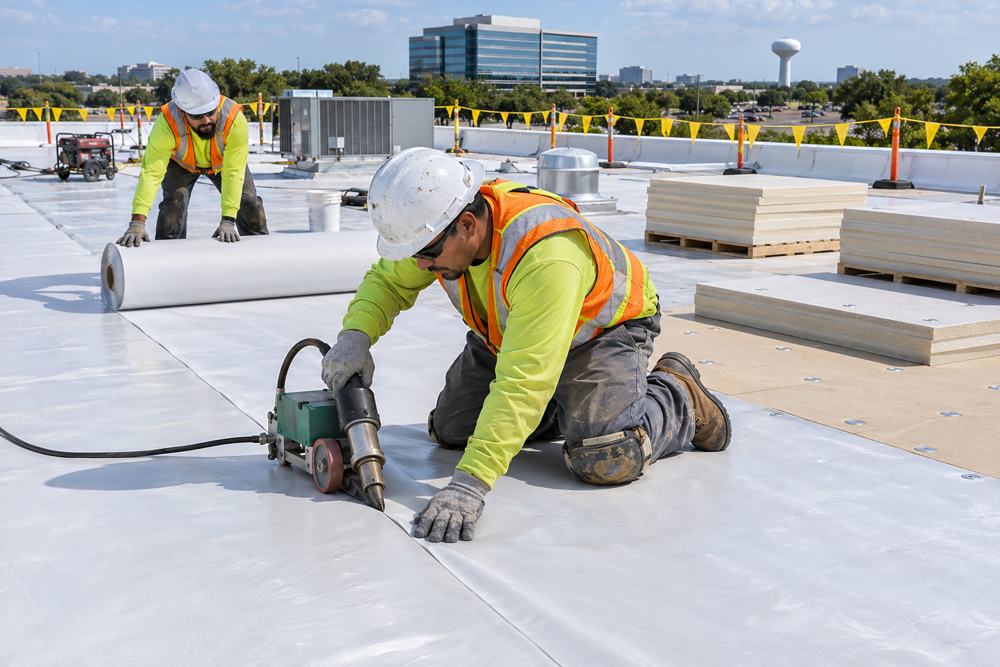
Commercial Roofing in Richardson, TX: Built for the Telecom Corridor
Richardson runs on commercial real estate. The Telecom Corridor along US 75, the corporate campuses around CityLine, the office parks off Campbell and Arapaho, the warehouses and flex space near the President George Bush Turnpike, and the retail and multifamily spread across the 75080, 75081, and 75082 zip codes all sit under flat and low-slope roofs that take a beating in the North Texas climate. For the facility managers and property owners who run those buildings, commercial roofing in Richardson, TX is not a once-a-decade afterthought; it's an asset to manage actively, because this is one of the hardest hail environments in the country. SCR, Inc. General Contractors serves Richardson and the broader DFW metroplex from its Terrell headquarters and Rockwall branch, with the full range of commercial roofing a property needs.
Richardson's building stock is varied, from single-tenant corporate campuses to multi-tenant office parks to industrial and distribution space, and each carries a different roof system with its own failure modes. Good commercial roofing in Richardson, TX means a contractor who knows those systems, understands the local storm reality, and handles everything from a spot leak to a full tear-off. That starts with the weather the roofs have to survive.
DFW Is a Top U.S. Hail Zone
The Dallas-Fort Worth area sits in one of the most active hail regions in the United States, averaging multiple significant hail events each year. That frequency is a leading reason commercial roofs across Richardson and North Texas need regular inspection and prompt storm repair.
Commercial Roof Warranties Run 20 to 30 Years
A properly installed TPO, PVC, or metal commercial roof system can carry a manufacturer warranty of roughly 20 to 30 years, including no-dollar-limit coverage. That protection depends on correct installation to specification and documented maintenance, which is what keeps the warranty valid.
Texas HB3 Governs Storm Claims
Texas House Bill 3 sets rules for how roofing contractors and insurers interact on storm-damage claims, including limits on certain practices. It shapes how a legitimate, locally licensed contractor handles an insurance restoration claim in Texas, in contrast to out-of-town storm-chaser operators.
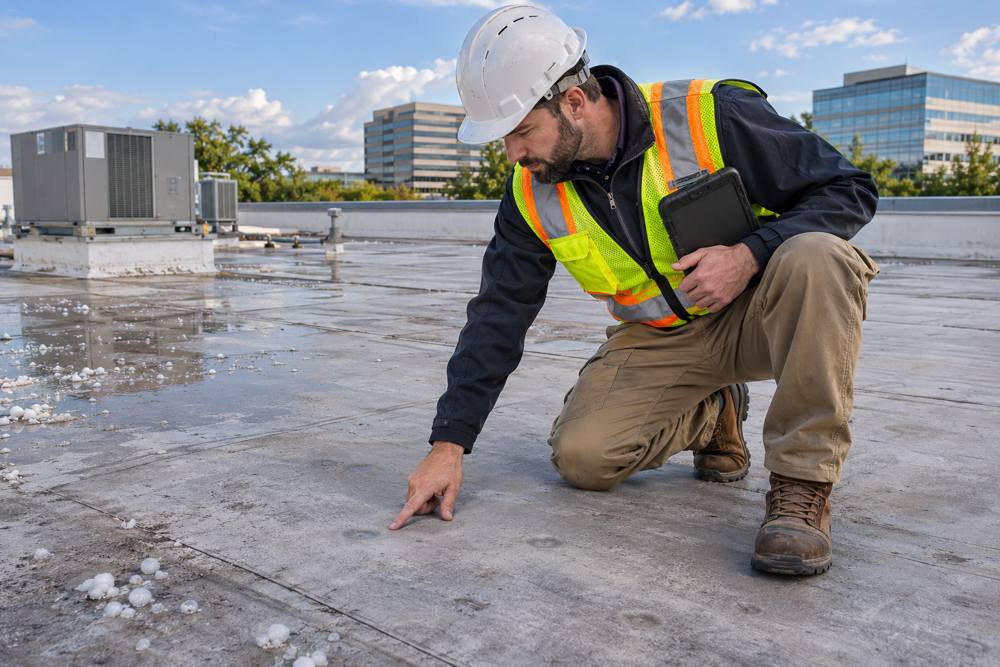
Dallas-Fort Worth sits in one of the most active hail zones in the United States, averaging roughly eight to twelve hail events a year that produce stones an inch or larger, and Dallas and Collin Counties see some of the highest commercial roofing claim frequency in the nation. Richardson, straddling that county line, catches the same storms. Hail does more than dent; it bruises single-ply membranes, fractures the surfacing on built-up and modified bitumen roofs, cracks aged seams, and dents metal panels, often without producing an obvious leak right away. That hidden damage shortens a roof's life and surfaces as leaks months later. A roof older than fifteen years frequently moves to full replacement after a single major hail event. This is why commercial roofing in Richardson, TX is as much about storm response and inspection as it is about installation.
The Roof Systems on Richardson Buildings
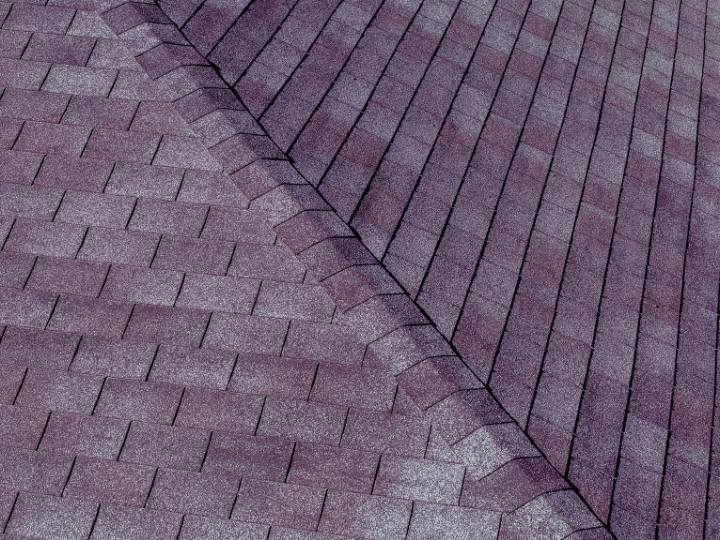
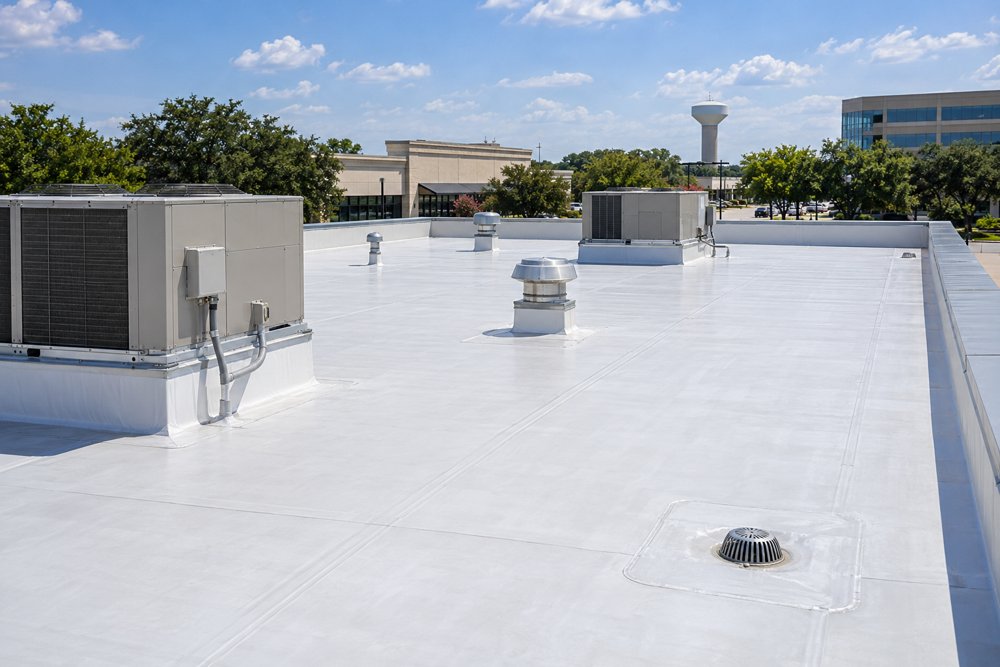
Most commercial roofs in Richardson are flat or low-slope, and the system underneath matters. TPO, a single-ply white membrane popular for its reflectivity and cost, is widespread on newer office and retail buildings, though its seams degrade under years of Texas UV, especially on south-facing exposures. PVC, a similar single-ply with stronger chemical resistance, shows up on restaurants and buildings with grease exhaust. EPDM, a black rubber membrane, covers many older buildings. Modified bitumen and built-up roofing, the multi-ply asphalt systems, still cap a lot of Richardson's older commercial and industrial stock. Standing-seam and R-panel metal roofs top others. Each ages differently and fails differently, and matching the repair or replacement approach to the actual system is the core of competent commercial roofing in Richardson, TX.
Repair Versus Replacement
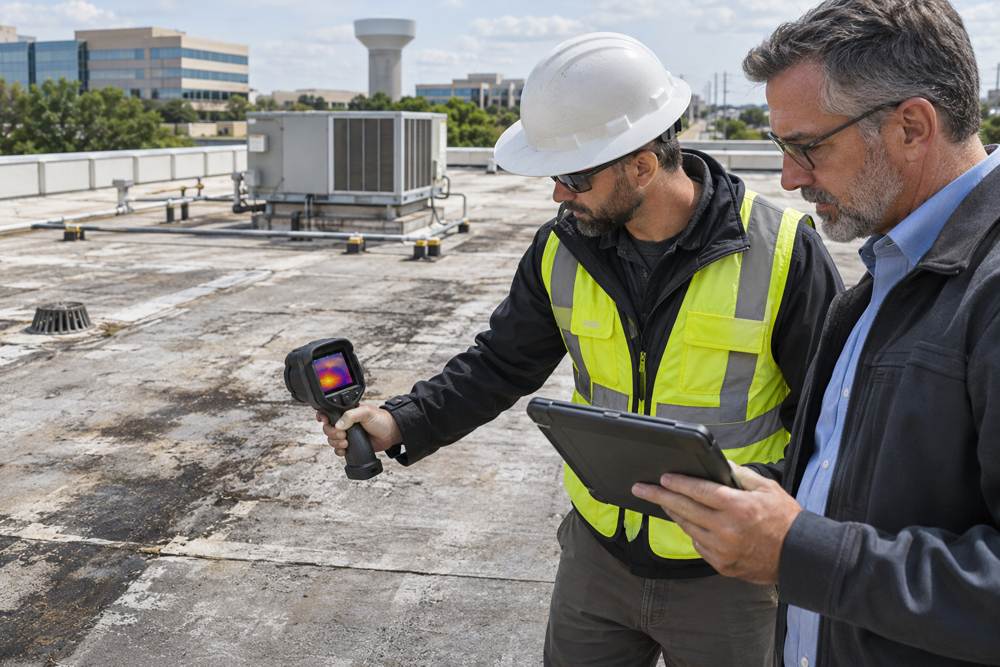
The question every facility manager eventually faces is whether to repair or replace. The honest answer turns on the roof's age, how widespread the damage is, and whether moisture has reached the insulation and the deck below the membrane. Isolated damage on an otherwise sound roof is a repair, often a spot leak fix in the 500 to 2,500 dollar range or multi-point work from 1,500 to 6,000 dollars. Widespread saturation, an aging membrane past its service life, or storm damage across most of the field favors replacement. The trap is paying for repeated patches on a roof that is actually finished. An infrared moisture survey, which detects saturated insulation under an intact-looking membrane, and core samples settle the question with evidence rather than guesswork, and a straight answer there is central to trustworthy commercial roofing in Richardson, TX.
Replacement and System Selection
When a Richardson roof reaches replacement, the system choice shapes the next few decades. TPO installed to specification runs roughly 6 to 12 dollars per square foot, PVC 8 to 14, EPDM 7 to 13, modified bitumen 10 to 18, and standing-seam metal 14 to 24, with spray foam and coating systems lower. Beyond the membrane, the decisions that matter are the attachment method, fully adhered versus mechanically fastened versus ballasted, the insulation R-value for North Texas climate zone 3A, and tapered insulation to move water to the drains rather than letting it pond. A properly installed Carlisle, GAF, Firestone, or Johns Manville system carries a manufacturer warranty of 20 to 30 years, including No Dollar Limit coverage, which pays back the higher installation cost across a building's mortgage cycle. Getting those specifications right is what separates a warranted system from a budget cover-up, and it defines quality commercial roofing in Richardson, TX.
Inspection and Maintenance as Asset Management
The cheapest roofing dollar is the one spent before a failure. A twice-annual inspection cycle, timed to the spring hail season and fall freeze prep, catches the parapet wall sealant failure, the clogged scupper, or the lifted seam before it becomes an interior water-damage claim. A single inspection runs a few cents per square foot, and annual maintenance programs run higher but cost a fraction of a major leak. The math is stark: a 500 dollar inspection that catches a failing detail can prevent a 40,000 dollar interior damage claim two storms later. For facility managers running a Richardson portfolio, treating the roof as a managed asset rather than a reactive expense is the smart form of commercial roofing in Richardson, TX, and SCR provides written inspection reports to support that planning.
Storm Damage, Insurance, and the Storm-Chaser Problem
After a major hail event, two things happen in Richardson: real damage appears, and out-of-town storm-chaser operators appear with it. Those crews show up without local presence or Texas licensing, push quick claims, and are gone before a warranty is ever needed. A legitimate commercial restoration follows a disciplined process: damage mapping, hail bruise documentation, a written scope of damage, review of the insurer's Xactimate estimate, and representation at the adjuster meeting. Texas law, including House Bill 3, sets rules for how roofing contractors and insurers interact on storm claims. SCR documents the damage and works with the property owner's adjuster to support a fair claim, while being clear that it is a contractor and not a public adjuster. That local, licensed, HB3-compliant approach is what responsible commercial roofing in Richardson, TX requires after a storm.
Extending Roof Life With Coatings
Not every aging roof needs a tear-off. For a structurally sound roof with a serviceable deck, a restoration coating system can add 10 to 15 years of service at roughly 30 to 50 percent of replacement cost. Silicone coatings handle the ponding water common on under-drained flat roofs, acrylic coatings suit tighter budgets, and a reflective coating cuts rooftop temperatures and the cooling load that Texas heat drives up. Coatings also carry their own manufacturer warranties. For a Richardson owner trying to stretch capital across a portfolio, a coating is often the right middle path between endless repairs and a full replacement, and it's a standard tool in well-rounded commercial roofing in Richardson, TX.
A Local, Certified Contractor
SCR, Inc. General Contractors is a family-owned, bonded and insured Texas commercial roofing contractor serving Richardson and the DFW metroplex, with manufacturer certifications across GAF, Carlisle, Firestone, Johns Manville, Versico, Sika Sarnafil, and Mule-Hide, Xactimate-trained estimators, and HB3-compliant storm restoration. The company runs 24 hours a day, seven days a week for emergency leak response and post-hail tarping, dispatching to Richardson from its Terrell headquarters and Rockwall branch, and offers free commercial roof inspections with transparent written reports. For commercial roofing in Richardson, TX, whether a repair, a replacement, a maintenance program, or a storm claim, contact SCR, Inc. General Contractors at (972) 839-6834 for a free inspection.
About Richardson, TX
City in the Dallas and Collin counties of Texas, United States
Emigrants from Kentucky and Tennessee settled near present-day Richardson in the 1840s. Before the Civil War, a small settlement called Breckenridge, located near present-day Richland College, was established. In 1873, the Houston and Texas Central Railway built a depot northwest of Breckenridge. After the H.&T.C. purchased acreage for a townsite from two local land-owners, the site was surveyed and laid out in blocks and lots, which the railroad began selling in 1874. The town was named after the secretary of the Houston & Texas Central Railroad, Alfred S. Richardson.[10]
In 1908, the Texas Electric Railway, an electric railway known as the Interurban, connected Richardson to Denison, Waco, Corsicana and Dallas. In 1910 the population was approximately 600. A red brick schoolhouse was built in 1914 and is now the administrative office for the Richardson Independent School District. In 1924 the Red Brick Road, the present-day Greenville Avenue, was completed. The completion of the road brought increased traffic, population and property values. The town incorporated and elected a mayor in 1925. In 1940 the population was approximately 740.
After World War II the city experienced major increases in population, which stood at approximately 1,300 by 1950. Throughout the 1950s the city continued to see growth including the opening of the Collins Radio Richardson office, Central Expressway, a police department, shopping centers, and many homes. Texas Instruments opened its offices in Dallas on the southern border of Richardson in 1956. This was followed by significant gains in land values, population, and economic status. In the 1960s Richardson experienced additional growth including several new parks, facilities, and the creation of the University of Texas at Dallas within the city limits. By 1972 the population was approximately 56,000. Residential growth continued through the 1970s and slowed in the 1980s. Commercial development increased throughout the 1980s. Richardson had a population of 74,840 according to the 1990 census. Population increases throughout the 1990s were primarily from development of the northeast part of the city. The city of Buckingham, after being completely surrounded by Richardson, was annexed into the city in 1996.
Richardson had a population of 91,802 as of the 2000 census. By 2002 Richardson had four Dallas Area Rapid Transit (DART) light rail stations and had built the Eisemann Center for Performing Arts and Corporate Presentations and the adjacent Galatyn Park urban center, which has a 2-acre public pedestrian plaza, a luxury hotel, and mixed-use development. Richardson was a "dry city" with no alcohol sales until November 2006, when the local option election passed to allow the sale of beer and wine in grocery and convenience stores. In the fall of 2008 Peter Perfect, a Style Network television show, came to Richardson. The business-makeover show remodeled SpiritWear, an apparel and embroidery store in the city's historic downtown area. The episode first aired on January 22, 2009. It was the first episode of the series to be filmed outside of California.[11][12]
The cities of Dallas, Plano and Garland constitute almost all of the Richardson border apart from the municipality's extreme northeastern "panhandle."
Richardson borders the Lake Highlands area of northeast Dallas to the south, North Dallas to the southwest, Far North Dallas to the west, West Plano to the northwest, East Plano to the north, the city of Murphy to the northeast, Sachse to the east, and Garland to the southeast.
According to the United States Census Bureau, the city has a total area of 28.6 square miles (74.2 km2), of which 28.6 square miles (74.0 km2) is land and 0.08 square miles (0.2 km2), or 0.32%, is water.[13]
Approximately two-thirds of the city is in Dallas County, with the northern third of the city in Collin County. Of the 28.6 square miles (74.2 km2) contained within the borders of the city of Richardson, 18.2 square miles (47 km2) lie in Dallas County; the other 9.2 square miles (24 km2) are in Collin County.
The climate in this area is characterized by hot, humid summers and generally mild to cool winters. According to the Köppen Climate Classification system, Richardson has a humid subtropical climate, abbreviated "Cfa" on climate maps.[14]
Richardson city, Texas – racial and ethnic composition Note: the US Census treats Hispanic/Latino as an ethnic category. This table excludes Latinos from the racial categories and assigns them to a separate category. Hispanics/Latinos may be of any race.
Map of racial distribution in Richardson, 2020 U.S. census. Each dot is one person:
⬤ White
⬤ Black
⬤ Asian
⬤ Hispanic
⬤ Multiracial
⬤ Native American/other
As of the 2020 census, Richardson had a population of 119,469, 29,113 families, and 45,812 households residing in the city, and the median age was 34.1 years. 19.8% of residents were under the age of 18 and 14.0% of residents were 65 years of age or older; for every 100 females there were 98.8 males, and for every 100 females age 18 and over there were 97.9 males age 18 and over.[20][21]
100.0% of residents lived in urban areas, while 0.0% lived in rural areas.[22]
There were 45,812 households in Richardson, of which 28.7% had children under the age of 18 living in them. Of all households, 47.1% were married-couple households, 20.3% were households with a male householder and no spouse or partner present, and 27.4% were households with a female householder and no spouse or partner present. About 29.3% of all households were made up of individuals and 8.9% had someone living alone who was 65 years of age or older.[20]
There were 49,267 housing units, of which 7.0% were vacant. The homeowner vacancy rate was 1.0% and the rental vacancy rate was 9.1%.[20]
As of the 2010 census, the population density was 3,213.9 people per square mile (1,241.1/km2). There were 36,530 housing units at an average density of 1,278.9 per square mile (493.8/km2).
In the city, 21.9% of the population was under the age of 18, 10.5% was from 18 to 24, 28.2% from 25 to 44, 25.8% from 45 to 64, and 13.6% was 65 years of age or older. The median age was 37.2 years. For every 100 females, there were 99.7 males.
In the 2015 American Community Survey 5-year Estimates males had a median income of $60,709 versus $50,404 for females. The per capita income for the city was $29,551. About 5.7% of families and 10.6% of the population were below the poverty line, including 11.7% of those under age 18 and 4.3% of those age 65 or over. According to a 2015 estimate, the median income for a family in Richardson was $72,427 and a median home price of $198,900.
By 1990, 10% of the Richardson population had not been born in the United States, which increased to 18.1% by 2000. According to the 2015 American Community Survey 5-year Estimates, this figure was 24.3%.[23] As of 2015, of those not born in the United States, almost 50% had arrived in the United States after 2000.[23]
Dallas County has an estimated 275,000 Arab Americans, many of whom have settled in Richardson. Many of them have come from Egypt, Iraq, Syria, Palestine, Jordan, Yemen, Morocco, etc.[24] The DFW Chinatown is located in Richardson, in part because of the large Asian population.[25] Esther Wu, a former editor of the Dallas Morning News, stated that Chinese immigration began in Richardson in 1975. Since then the Chinese community has expanded to the north.[26] In the mid-1980s the majority of ethnic Chinese K–12 students in the DFW area resided in Richardson.[27]
By 2012 North Texas had over 60 Chinese cultural organizations and most of them were headquartered in Richardson and Plano.[27] The Dallas Chinese Community Center (DCCC; Chinese: 达拉斯华人活动中心; pinyin: Dálāsī Huárén Huódòngzhōngxīn) is in the DFW Chinatown. It includes English as a second language (ESL) classes and 20,000 books written in Simplified Chinese; the center imported some books from People's Republic of Mainland China.[25] As of 2011 the Chinese restaurants catering to ethnic Chinese in DFW are mainly in Richardson and Plano.[26] The University of Texas at Dallas in Richardson, as of 2012, has almost 1,000 Chinese students. The university has a program to recruit students of Chinese origin.[27]
Richardson's Indian immigrant community has been primarily driven by the international telecommunications industry that is so prevalent in the community. The Indian Association of North Texas headquarters are in Richardson.[28] Indo-Pak grocery store is located in an Indian-oriented strip shopping center east of Central Expressway.[29] Of the suburbs in the DFW area, Richardson had one of the earliest Indian settlements.[28]
Richardson is home to a large community of Vietnamese Americans and even has a significant amount of Vietnamese-catering retail stores, malls, markets, and plazas, especially near U.S. 75, such as the Cali Saigon Shopping Mall - which borders Dallas and Garland respectively.
Despite declining economies in other parts of the United States, from 2005 to 2009 Richardson enjoyed substantial increases in economic growth, with the city's total assessed property value rising from $8.3 billion in 2005 to $14 billion in 2017. Additionally, sales tax collection increased from $21 million in 2005 to an estimated $32.9 million in 2017.
Since 2008, both Standard & Poor's and Moody's have upgraded Richardson's credit rating to "AAA" from the previous rating of "AA+". At the time, Richardson was one of only four cities in the state of Texas and one of 88 cities in the nation with an "AAA" rating from Standard & Poor's. In 2015, the North Central Texas Council of Governments (NCTCOG) determined Richardson's daytime population to be 156,065 based on American Community Survey information.[30] The economy remains rooted in the telecommunication industry. However, Richardson's property tax base is deep and extends beyond its telecommunication roots to include other sectors including insurance, health care, technology and finance. The tax base is diverse with the 10 leading taxpayers accounting for 16.17% of total assessed value.
On March 1, 2014, the Richardson Fire Department officially received its Class 1 ISO rating. The Insurance Services Office (ISO) is "a leading supplier of statistical, underwriting and actuarial information for the property/casualty insurance industry", and its rating is used to measure the quality and effectiveness of fire protection in a community. At the time, Richardson was one of only 56 municipalities in the country to achieve this highest rating, which tends to reduce property/casualty insurance premiums.[31]
According to the Richardson Economic Development Partnership's listing on Major Employers (last updated May 2018),[34] the top employers in the city were:
Richardson was originally incorporated in 1925, with the first charter being adopted in 1956 and the latest revision made in November 2015. The community is a home rule city and has operated under the council–manager form of government since 1956.[35] Richardson voters simultaneously elect six Council members and a mayor to represent them every two years. The council members representing the four districts (1 to 4) must live in each district, respectively; however, the mayor and the remaining two districts (5 and 6) can live in any part of the city. All council members and the mayor are elected at large, with four Council members representing each of the city's four districts. The city council is elected for two-year terms on a nonpartisan basis.
The Charter requires that the city council appoint a city manager to act as the chief administrative and executive officer. The city manager is not appointed for a fixed time and may be removed at the will and pleasure of the majority of the city council. One of the responsibilities of the city manager is to appoint and remove department heads and conduct the general affairs of the municipal government in accordance with the policies of the city council.
The city provides to its citizens a full range of services including police and fire protection, emergency ambulance service, water and sewer service, solid waste disposal, park and recreational activities, cultural events, and a library. In addition, the city provides planning for future land use, traffic control, building inspection, and community services and operates two 18-hole golf courses. The city also operates the Charles W. Eisemann Center for Performing Arts and Corporate Presentations, which is a multi-venue performing arts and presentation center.
The City of Richardson is a voluntary member of the North Central Texas Council of Governments (NCTCOG) association, the purpose of which is to coordinate individual and collective local governments and facilitate regional solutions, eliminate unnecessary duplication, and enable joint decisions.
UT Dallas Student Services Building - a LEED Platinum Building
The University of Texas at Dallas, also referred to as UT Dallas or UTD, is a public research university in the University of Texas System. Despite its name the UT Dallas main campus, consisting of approximately 445 acres (1.80 km2), is within the Richardson city limits at 800 West Campbell Road. The campus is sited with Campbell Road on the south, Floyd Road on the east, Waterview on the west, and Synergy Park Boulevard on the north.[38] The university owns an additional 265 acres (1.07 km2) in Richardson, adjacent to the campus, between Synergy Park Boulevard and the President George Bush Turnpike.[39] The UTD Student Services building, completed in 2010, is the first academic structure in Texas to be rated a LEED Platinum facility by the United States Green Building Council. During 2016, construction was completed on the Student Services Building addition. New projects include an Alumni Center, a Brain Performance Institute and an engineering building as well as additional housing options. These enhancements are part of a campus renovation that has included hundreds of millions of dollars of investment in new and upgraded buildings since 2009. For the fall 2016 semester, UT Dallas had a total of 26,793 enrolled students.[40]
Dallas College (formerly Dallas County Community College District or DCCCD) serves areas in Dallas County.[41]Richland College of Dallas College is in Dallas on the Richardson border. It is the largest school in the DCCCD, featuring nearly 20,000 students. In 2005, Richland became the first community college to receive the Malcolm Baldrige National Quality Award.[42]
The city is served by the Richardson Independent School District (RISD) within the Dallas County portion of the city,[43] and the Plano Independent School District (PISD) within the Collin County portion of the city.[44] Despite that name, however, most of the Richardson Independent School District lies outside of the municipal boundaries of Richardson: 60 percent of RISD is in Dallas, with 35 percent in Richardson and 5 percent in Garland.[45]
The RISD and PISD have many Blue Ribbon Schools.[46][47][48][49] The Blue Ribbon Schools Program is a United States government program created to honor schools. The Blue Ribbon award is considered to be the highest honor that an American school can achieve.
Sections of Richardson in the Plano Independent School District are served by several schools. Aldridge, Haggar, Miller, Schell, and Stinson elementary schools are within Richardson and serve Collin County portions of Richardson.[54][55] A section of Collin County Richardson is zoned to Mendenhall Elementary School in Plano.[56] Otto, Frankford and Wilson middle schools in Plano and Murphy Middle School in Murphy serve separate sections of Collin County Richardson. Vines High School and T.H. Williams High School, 9–10 schools in Plano, serve separate sections of Collin County Richardson, along with McMillen High School in Murphy. Plano Senior High School and Plano East Senior High School also serve separate sections of Collin County Richardson.
Four charter schools operate within the City of Richardson. These include the Evolution Academy Charter School (9–12), Premier High School of Richardson (6–12), Vista Academy of Richardson (K–12), and the Winfree Academy Charter School (Richardson) (9–12).
The Richardson Public Library is located at 900 Civic Center Drive at the southwest corner of U.S. Route 75 (North Central Expressway) and Arapaho Road.[59]
The roots of the Richardson Public Library date back to 1947 when a branch of the Dallas County Library was established in a section of the Cash Dry Goods store on East Main Street in downtown Richardson. The fledgling library collection numbered about 400 volumes and was managed by Jessie Durham the store's proprietor. The city council established the library as a city department in 1958 and in 1959 the library moved into a newly constructed building at 310 Tyler Street. This new library was just under 6,000 square feet (560 m2) in size and was built at a cost of $100,000.[60]
Richardson was experiencing rapid growth in the 1960s and 1970s, and the library facility soon became inadequate for community needs. The current facility was constructed at a cost of $2 million and opened December 1, 1970. The new 81,650-square-foot (7,586 m2), four-story building opened with the use of two floors and a small portion of a third.[61] The basement was finished in 1980 for the reference collection and services. In 1995 the library underwent another expansion which finished the upper floor and renovated the three previously opened floors. Another renovation occurred in 2006 when the Youth Services department was expanded.[60]
In 2008 the library set a new record for the number of items circulated in a fiscal year when the 1 millionth item was checked out in the fall of 2008. The building has undergone building renovations and technological improvements in recent years that have enhanced the library experience for patrons. Since 2014, the digital library has expanded to include movies, music and magazines as well as books and audiobooks. In 2015, the Richardson Library established a "makerspace" that initially included a 3D printer, designated computers with creative applications and software, and kits for the early exploration of electronics.
The Texas Municipal League recognized the library with its "Achievement of Excellence in Libraries" award every year from 2004 to 2017.[62]
Richardson also benefits from the Dallas Area Rapid Transit (DART) Light Rail line which parallels U.S. 75 and has four stations in the city. In October 2016, DART approved the future construction of the Silver Linecommuter rail with the adoption of its 20-Year Financial Plan. The Silver Line has been in service since October 25, 2025.[63] The Silver Line connects DFW Airport to the eastern side of Plano, with stations in Richardson located at The University of Texas at Dallas and CityLine. The Silver Line also connects to Trinity Metro's TEXRail line, which connects downtown Fort Worth to DFW Airport. In order to take full advantage of these transportation assets for development and redevelopment purposes, the City has implemented three Tax Increment Financing (TIF) Districts. TIF District #1 was established in November 2006, encompassing both sides of the U.S. 75 corridor from Campbell Road south to Spring Valley Road, and then extending west from U.S. 75 along Spring Valley Road to Coit Road. TIF District #2, established in November 2011, is bounded by President George Bush Turnpike on the north, Wyndham Lane on the east, Renner Road on the south, and the DART rail line on the west. TIF District #3, established in November 2011, is bounded by President George Bush Turnpike on the north, the DART rail line on the east, Renner Road on the South and has its western boundary between Alma Road and U.S. 75. Dallas County participates financially in TIF District #1 and Collin County participates financially in TIF District #2 and TIF District #3.
Central Trail is a 12-foot-wide multi-use concrete path which is mostly parallel to U.S. 75.[64] The southern Central Trail extension opened in June 2014 and the northern extension opened in 2015. The new hike and bike trail segments mean that the central spine to Richardson's trail network will run from city limit to city limit, eventually connecting to trails throughout the region.
In July 2015, Richardson was named a Bronze Bicycle Friendly Community by the League of American Bicyclists.[65] Richardson has a long-range plan to provide bicycle facilities and to designate preferred bicycle routes on lower-volume, lower-speed roadways. There are now more than 15 miles of bike lanes in Richardson.[66]
Braithwaite, Barbara (editor). A History Of Richardson. Richardson, Texas: Richardson Centennial Corporation, 1973.
Gillespie, Gwyn. Historic Richardson: An Illustrated History. San Antonio, Texas: Historical Publishing Network, 2002.
Harris, Janet (editor). And The Telling Takes Us Back: An Oral History of Richardson. Richardson, Texas: University of Texas at Dallas Center for Continuing Education, c1984-85. (Note: Part 1 consists of 21 interviews with representatives of families who settled in and helped in the development of the city. It covers the time period of early settlement to 1940. Part 2 begins with 1940 and continues to 1985.)
^"Major Employers". Telecom Corridor. March 7, 2017. Retrieved June 19, 2017.
^Butler, Steven R. (2022). A Sesquicentennial History of Richardson, Texas, Vol. 1, Rural Roots (First ed.). Richardson, Texas: Poor Scholar Publications. pp. 77–79, 93–96, 106. ISBN978-1737948018.
^ abBrettell, Caroline B. '"Big D" Incorporating New Immigrants in a Sunbelt Suburban Metropolis' (Chapter 3). In: Singer, Audrey, Susan Wiley Hardwick, and Caroline Brettell. Twenty-First Century Gateways: Immigrant Incorporation in Suburban America (James A. Johnson metro series). Brookings Institution Press, 2009. ISBN0815779283, 9780815779285. Start p. 53. CITED: p.56.
^Brettell, Caroline B. '"Big D" Incorporating New Immigrants in a Sunbelt Suburban Metropolis' (Chapter 3). In: Singer, Audrey, Susan Wiley Hardwick, and Caroline Brettell. Twenty-First Century Gateways: Immigrant Incorporation in Suburban America (James A. Johnson metro series). Brookings Institution Press, 2009. ISBN0815779283, 9780815779285. Start p. 53. CITED: p. 64.
^"Dies at 56". Associated Press in The Tuscaloosa News. May 15, 1980. Retrieved March 18, 2010. Bette Claire Graham, inventor of Liquid Paper ... She was the mother of Michael Nesmith, who was a member of the defunct Monkees rock group.
Should I repair or replace my commercial roof in Richardson?
It depends on the roof’s age, how widespread the damage is, and whether moisture has reached the insulation and deck. Isolated damage on a sound roof is usually a repair, while widespread saturation or an aging membrane favors replacement. An infrared moisture survey settles it with evidence, and SCR recommends the option that lasts, not the biggest job.
How does North Texas hail affect a commercial roof in Richardson?
Dallas-Fort Worth sits in one of the most active hail regions in the country, and hail can bruise membranes, crack seams, and dent metal, often without an obvious leak at first. That hidden damage can shorten a roof’s life and surface as leaks later, which is why a professional post-storm inspection matters even when no leak has appeared.
Does insurance cover storm damage to a commercial roof in Texas?
Often, when a storm causes sudden damage, coverage applies, though it depends on the policy. Texas law, including HB3, governs how roofing contractors and insurers interact on storm claims. SCR documents the damage and works with your adjuster to support a fair claim, but it is a contractor, not a public adjuster, and does not act in that capacity.