Under the UL 325 safety standard, automatic gate operators require entrapment-protection devices such as photo-eyes or reversing edges, so a properly working gate stops or reverses instead of closing on a person, pet, or vehicle.
Automatic gates rely on control boards and low-voltage electronics that power surges can damage, which is why surge protection and proper wiring matter for gate reliability in areas prone to Santa Ana wind and grid events.
Because gate photo-eyes work by an unbroken infrared beam, a dirty lens, a misaligned sensor, or debris across the beam can make the gate behave as though something is in the way, one of the most common and easily fixed gate faults.
A residential gate is the first thing that greets visitors and the last line of security at night, and homeowners rarely think about it until it stops working. When a driveway gate refuses to open on the way to work or will not close at bedtime, it moves from convenience to problem in an instant. Most residential gate failures fall into a handful of familiar categories, and knowing what they are, and what a repair involves, helps a Canoga Park homeowner understand what is happening at their own entrance.
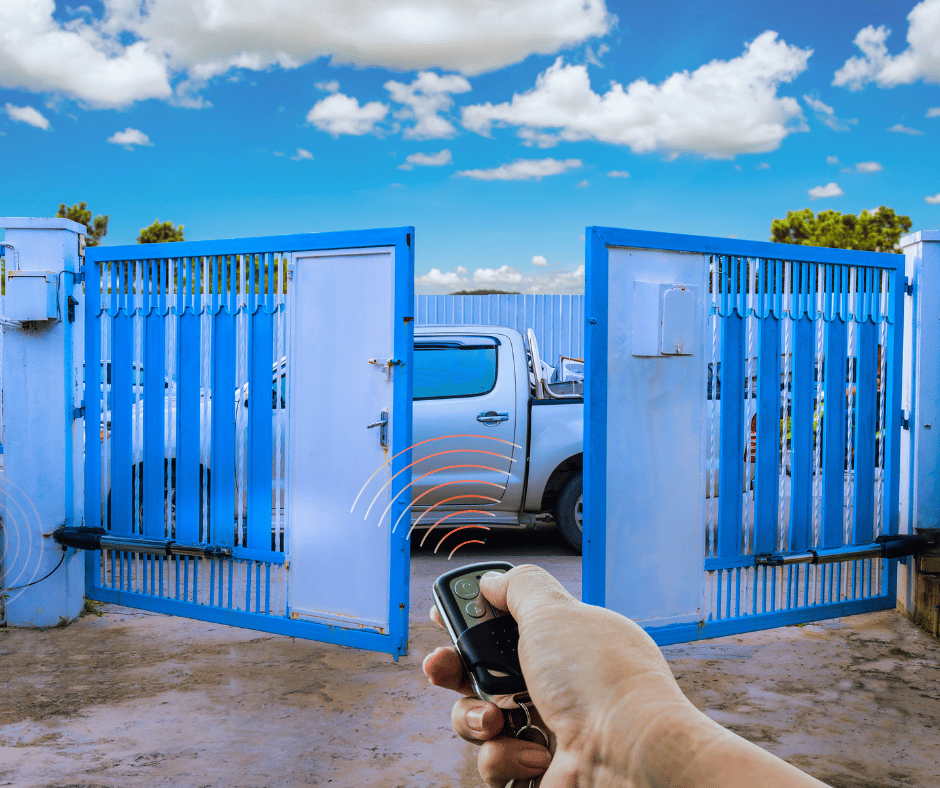
The most common complaint is simple: the gate will not move. The causes are varied. Dead remote or keypad batteries are the easiest and most overlooked. A failed or struggling gate motor, a blown capacitor, or a control-board fault stops the gate outright. On sliding gates, debris in the track or a worn roller jams the movement. On swing gates, a seized actuator arm or hinge does the same. A tripped safety sensor will also stop a gate cold, since the system is designed not to move when it thinks something is in the way. A technician works through these systematically rather than guessing.
A gate that opens but reverses partway, or refuses to close, is often a photo-eye or safety-sensor issue. These beam pairs and reversing edges are entrapment-protection devices required on automated gates, and they are meant to stop or reverse the gate when something breaks the beam. When a lens gets dirty, a sensor drifts out of alignment, or a spider web crosses the beam, the gate reads an obstruction that is not there and stops. Realigning and cleaning the sensors usually restores normal operation, and it keeps the safety function working the way it should.
Modern residential gates are as much electronics as metal. Keypads stop responding, intercoms fail, remotes lose their programming, and loop detectors that sense a car in the driveway drift out of calibration. In the San Fernando Valley, Santa Ana wind events and grid fluctuations bring power surges that can damage control boards and low-voltage wiring, which is a frequent hidden cause of a gate that suddenly stops working. Repairs here range from reprogramming a remote to replacing a fried control board or adding surge protection to prevent a repeat.
Gates are heavy, and gravity and use take a toll. Swing gates sag as hinges wear, until the gate drags and the opener strains against the misalignment. Sliding gates wear rollers and stretch chains until the movement grows rough and noisy. A gate that creaks, grinds, or makes the motor work harder than it used to is showing mechanical wear, and catching it early prevents the strain from spreading to the more expensive operator. Realignment, hinge or roller replacement, and chain adjustment restore smooth movement and protect the motor.

Residential gate repair rewards a technician who diagnoses the true cause rather than swapping parts. Herotec handles residential gate repair in Canoga Park as a licensed, family-run specialist, working on sliding, swing, wrought iron, electric, and manual gates, with same-day service in most cases and flat-rate quotes given on-site before any work begins. Technicians carry common parts for a first-visit fix, and there is no added charge for evenings or weekends.
Most residential gate problems come down to power and batteries, safety sensors, access-control electronics, or mechanical wear, and each has a clear fix once the cause is found. For a Canoga Park homeowner, the goal is simple: a gate that opens when it should and secures the property at night. A proper diagnosis and repair gets it back there.
For residential gate repair in Canoga Park, call Herotec at (747) 298-9209 for a flat-rate quote and same-day service in most cases.
Redirect to: