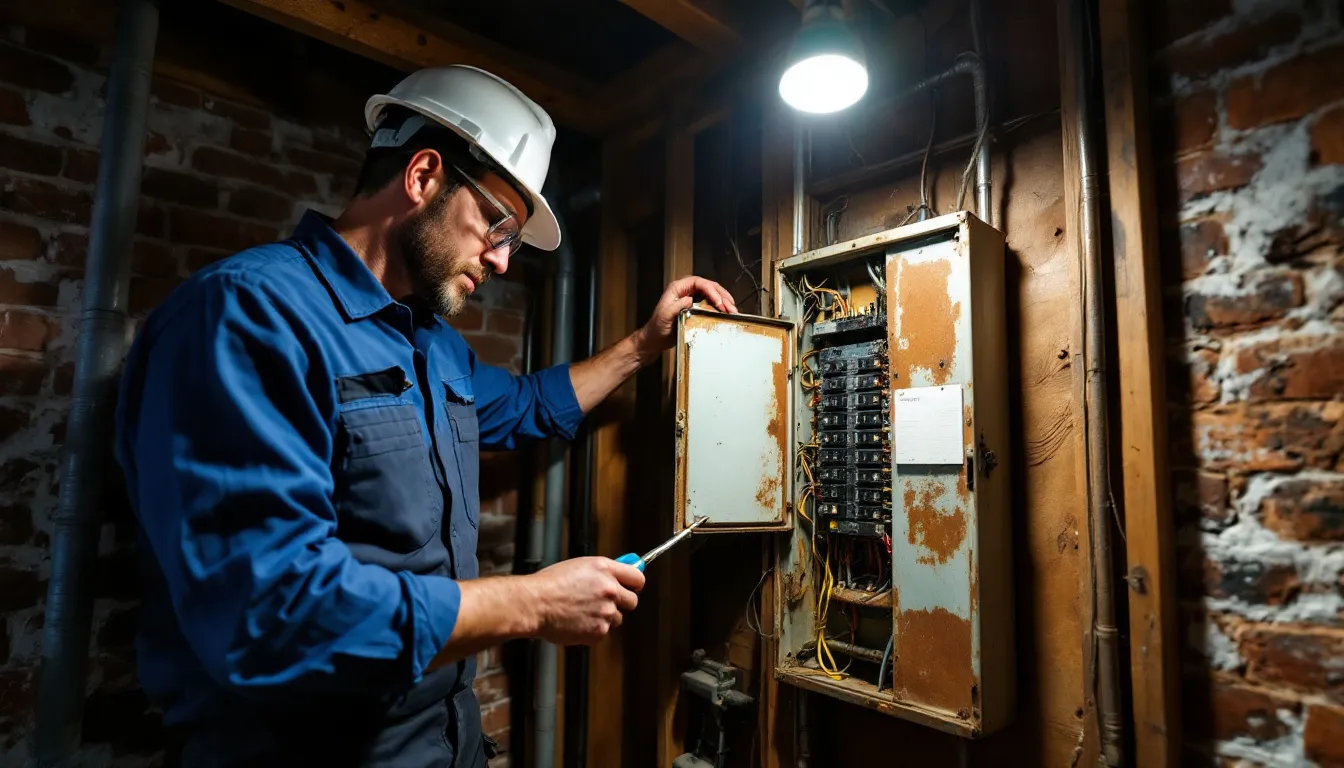
Power Quality and Surge Solutions for Orange County Residences
The lights look fine until they do not. A microwave resets when the AC kicks on. A garage door opener stutters. A Wi‑Fi router hangs a few times a week. Each nuisance points to the same thing: the quality of power hitting your home and how well your electrical system manages it. In Orange County, where coastal weather, Santa Ana winds, grid switching events, and a growing load from EV chargers and heat pumps all collide, power quality is not an abstract engineering idea. It lives in your breakers, your grounding electrodes, and the sensitive electronics you use daily.
This guide comes from the job site, not a brochure. I have traced nuisance trips back to loose neutrals, replaced scorched surge strips that never should have been your first line of defense, and seen new appliances damaged by voltage swells during utility work. A well designed surge and power quality plan costs less than the price of one dead refrigerator control board, and it works quietly in the background for years.
What power quality actually means for a home
Power quality covers stability and cleanliness of the electricity delivered to your devices. It includes voltage sags, swells, transients, harmonics, frequency variation, and grounding integrity. In a residential context, three problems dominate:
- Short, sharp surges and spikes that ride in on the service or originate inside the house when motors start or stop.
- Voltage sags when large loads start, or in the early evening when the neighborhood’s AC units and EV chargers all run.
- Neutral and grounding issues that create odd symptoms, from flicker to smart devices rebooting.
A practical definition helps. If it heats a wire or confuses a circuit board, it affects power quality. If it exceeds the surge capacity of a device’s internal protection, it becomes a repair bill.
Why Orange County homes see unique stressors
Lighting strikes are not frequent along our coast, but that misleads people into thinking surges are rare. A good share of damaging transients come from utility switching and faults on nearby lines. Santa Ana wind events snap branches into lines and prompt utility reconfiguration. Hot days push transformers hard. After storms, crews restore sections of the grid and the voltage can rise briefly while loading balances. That is when we hear from homeowners in Mission Viejo, Fullerton, and Costa Mesa about a handful of electronics failing within a week.
Modern loads also reshape the picture. An electric vehicle charger adds a large, often continuous draw. Solar inverters push energy back through service equipment, changing fault paths and transient behavior. LED lighting drivers and variable speed HVAC motors use electronics that both generate and dislike electrical noise. The more high efficiency gear you add, the more careful you have to be with grounding, bonding, and surge protection.
When a residential electrician in Orange County audits a home now, the questions go beyond “how many circuits do you need.” We ask about EV usage, rooftop solar, standby generators, smart home wiring, and even home office equipment that cannot go down mid‑call. Power quality runs through each decision.
The anatomy of a surge and how it damages gear
Surges fall into two rough categories. External transients arrive via the service conductors due to lightning in the area, utility switching, faults, or large motors up the line. Internal transients come from your own equipment. Think of an AC compressor or a well pump snapping off, and the magnetic field collapsing. That energy reflects back as a spike, which seeks a path to equalize, often right through the path of least resistance in a device power supply.
Modern equipment hides this dance. The tiny metal oxide varistors (MOVs) on a surge strip or inside a TV clamp a spike by sacrificing themselves. They degrade with each hit. Given a big enough event, they vaporize. When a client in Irvine lost a set of dimmer switches and a network switch after a windy afternoon, our meter saw a few 600 to 800 volt transients on the line. Not a firework show, just big enough to punch through two already tired MOVs. A whole house surge protective device would have taken the brunt, with headroom to spare.
SPDs, types, and where to install them
Surge protective devices, or SPDs, are your shock absorbers. They do not clean up a sag, and they do not replace good grounding, but they take the edge off transients before they cook sensitive electronics.
Type 1 SPDs mount on the line side of the main service equipment. They protect against external events, including those that occur before your main overcurrent protection. In many Orange County homes with meter‑main combos, a Type 1 device goes at the service disconnect or integrated into a meter socket collar where the utility permits it.
Type 2 SPDs mount on the load side inside your main panel or subpanel. They protect against both external and internal surges and are the most common residential choice. We land them on a dedicated two‑pole breaker as close to the main lugs as the layout allows, and we use the shortest possible leads. That detail matters. Every extra inch of lead adds let‑through voltage during a transient. We have measured over 100 volts of extra let‑through created by sloppy lead dress.
Type 3 SPDs live at the point of use, usually as quality plug‑in strips or receptacles with built‑in surge protection. They are the last line of defense for home office electronics, AV racks, and appliances with control boards. A good plan uses Type 1 or 2 at the service and Type 3 at the most sensitive devices.
On a panel replacement Orange County homeowners often combine the work with a new integrated SPD. Manufacturers like Siemens, Eaton, and Square D offer models that occupy two breaker spaces and tie neatly into the bus. If the panel is full, we look at a subpanel and run the SPD there, or we open up spaces using handle ties and tandem options where code permits.

Grounding and bonding, quietly doing the real work
Surge suppression without proper grounding is a seatbelt without an anchor point. In older Orange County homes built before the mid 1970s, we still see undersized grounding electrode conductors, loose clamps on water pipes, and corroded ground rods. Sometimes a remodel added plastic piping that broke the grounding path. Other times, a subpanel bond screw got left in place, creating parallel neutral‑ground paths and odd circulating current.
During an electrical inspection in Orange County, we always verify:
- The grounding electrode system uses at least two ground rods or an approved Ufer electrode, with correct clamps and continuous conductors sized per code.
- The main bonding jumper is installed at the service equipment, and neutrals and grounds are separated downstream in subpanels.
- Service raceways and metallic water or gas pipe bonds are tight and corrosion free.
- The meter‑main or service disconnect lugs are torqued to spec, and the neutral lug does not show heat discoloration.
These steps reduce the impedance of the path that a surge will use to bypass your equipment. Better path, lower let‑through.
Voltage sags, swells, and brownouts, and what to do about them
Not every problem is a spike. A sag can be just as destructive over time. Motors run hotter, electronics reset, and LED drivers chirp. We see sags in late afternoon on long feeders or after a new crop of EV chargers goes in around a cul‑de‑sac.
Start with the basics. An electrical panel upgrade in Orange County homes that still carry 100 amp services can relieve chronic voltage drop if the service conductors or feeders are undersized. Inside the home, a whole home rewiring job that replaces aging aluminum branch circuits and worn receptacles with new copper and tight terminations can stabilize loads.
For critical circuits, a line interactive UPS smooths short sags and rides through brief outages. Medical equipment, office networks, and garage openers all benefit. For structured wiring, we add a small UPS in the low voltage panel to keep access points and switches alive.
If a swell or overvoltage event shows up during utility switching, a good Type 2 SPD combined with correct main breaker settings usually handles it. But if a swell persists, that is a utility issue. We document it with a power logger and coordinate with the service provider.
Solar, EV chargers, and the new fault paths inside your home
Add a rooftop solar array or a battery system, and you add inverters and transfer logic. These devices expect clean, bonded, and correctly grounded systems. A miswired neutral or floating ground creates nuisance inverter trips. During EV charger installation in Orange County, we size feeders to minimize voltage drop, especially on long runs in garages or detached structures. A 60 amp EV circuit that drops 6 or 7 percent at peak charge will trigger charger throttling and may cause dimming in nearby lighting. We keep it under 3 percent on design, often with 6 AWG copper where owners expect high duty use.
EV chargers and inverters can generate high frequency noise. While SPDs clamp fast edges, a small amount of line filtering at sensitive AV or office circuits can help. More often, good circuit separation and correct neutrals solve the symptoms. I have seen a home theater hum cleared by moving a treadmill to a different circuit and tightening a loose neutral in a subpanel.
For solar, place SPDs on the AC load side near the interconnection point, and on the DC side if the manufacturer requires it. Rapid shutdown and arc‑fault detection devices protect against sustained faults, but they do not replace surge devices. When pairing an electric vehicle charger with solar, coordinate production and charging schedules. Charging mid‑day soaks up PV output and reduces evening peak load on the neighborhood transformer, which softens sag risk for everyone.
Generators and transfer switches that play nicely
Portable generators are famous for backfeeding mishaps when people use a suicide cord and a dryer receptacle. Leave that behind. Proper generator installation in Orange County uses a listed transfer switch or interlock kit, and a neutral switching scheme that matches the generator bonding method. A mismatch here creates parallel neutral paths and elevated touch voltage during operation.
Generators create their own flavor of power quality challenges. Some portables have high total harmonic distortion. Sensitive electronics do not love that. Inverter generators produce cleaner power, at a higher cost per watt. If you size for lighting and refrigeration only, you can often pick an inverter style that keeps THD in the 3 to 5 percent range. For whole home standby systems, we keep the neutral handling and grounding consistent across service, transfer switch, and generator, and we add SPDs on both utility and generator sources.
Smart devices, low voltage systems, and hidden weak points
A modern home might have 30 or more electronic power supplies scattered through it. Doorbell transformers, PoE switches, Wi‑Fi mesh nodes, landscape lighting drivers, irrigation controllers, thermostats, and garage openers all add up. They share something in common. They hate noisy power and weak neutrals.
In low voltage wiring projects, we take care to keep Class 2 cabling away from high current branch circuits and motor loads. We bond the low voltage enclosures to the house grounding system. For landscape lighting installation around pools and patios, we use listed transformers with integral protection and weatherproof connections. For outdoor lighting in Orange County neighborhoods near the coast, we choose stainless or brass fixtures and seal splices carefully to cut corrosion that leads to intermittent shorts and voltage drop.
If you are building out smart home wiring, plan dedicated circuits for the network rack and AV equipment with quality receptacles, tight terminations, and a Type 3 surge strip backed by an SPD at the panel. Pay attention to arc‑fault and ground‑fault protection requirements. Many nuisance trips trace back to daisy chained power supplies on bargain strips. Clean that up and the problems fade.
How we diagnose power quality issues in the field
Good electrical troubleshooting relies on observation as much as instruments. The story you tell matters. Do lights dim when a specific appliance starts, or does the whole house go dull when the neighbor’s heat pump kicks in at 6 p.m.? Do smart switches drop off Wi‑Fi after a storm, or only when the garage door opens? A licensed electrician in Orange County will bring a few key tools: a clamp meter, a thermal camera, a good quality multimeter, a receptacle tester, and when needed, a power quality analyzer that logs sags, swells, and transients over days.
We start at the service. Check lug torque, look for heat on the neutral, confirm grounding electrode continuity. Inside, we pull the panel cover and inspect bus integrity, breaker fit, and any signs of arcing. We measure voltage at idle, during a known large load, and at end of run receptacles. If we suspect poor neutral integrity, we apply a small load and watch for voltage imbalance on multiwire branch circuits.
On one job in Laguna Niguel, a homeowner complained of computer reboots at random times. Our logger caught half cycle dropouts and a few 400 volt spikes. The culprit was a failing pool pump motor that chattered on startup. A new motor, a Type 2 SPD at the subpanel that fed the pool equipment, and a UPS for the office PC ended the problem.
Telltale signs your home needs attention
- Flicker or dimming when the AC, microwave, or EV charger starts running.
- Electronics that reset or fail more often after windy days or utility work in the neighborhood.
- GFCI or AFCI breakers that trip with no clear fault, especially in mixed old and new wiring.
- A tingling sensation when touching metal appliances, or odd hums and buzzes in AV gear.
- Surge strips with indicator lights off, or scorch marks on plugs and receptacles.
The right sequence for hardening a home against surges and sags
- Verify and repair grounding and bonding at the service and all subpanels.
- Install a Type 2 SPD at the main panel, and Type 1 at the service disconnect where allowed.
- Protect sensitive loads with quality Type 3 strips and, for critical circuits, a line interactive UPS.
- Address capacity and wiring: panel replacement or electrical panel upgrade, tighten neutrals, upsize long EV charger runs to cut voltage drop.
- Add point protection for solar inverters, generator sources, and outdoor low voltage systems.
Integration with everyday electrical work
Power quality should sit in the background of routine jobs. During outlet installation in Orange County remodels, we use tamper resistant, hospital grade or commercial spec receptacles in high use areas. They hold plugs tighter and reduce heat from poor contact. Ceiling fan installation benefits from dedicated fan rated boxes and balanced blades, but it also gains from stable voltage and good switching to avoid humming and remote failures.
Lighting installation, whether recessed lighting in a kitchen or outdoor lighting around a patio, puts electronic drivers into your ceiling and yard. Stable power and surge protection lengthen their life. A dimmer that chatters or fails early often points to a driver or neutral issue upstream.
When we perform Orange County electrical repair work after a surge event, we often find multiple small casualties. A garage door opener board, a Wi‑Fi extender, a few GFCI receptacles. Replacing them without addressing the cause invites repeat business for the wrong reason. Adding a panel mounted SPD and tightening terminations costs less than the set of parts in many cases.

Code, permits, and doing it right the first time
Orange County jurisdictions enforce NEC requirements for surge protective devices on certain services and in many new builds. Even when not mandated, inspectors welcome SPDs installed correctly with short leads and dedicated breakers. Permitting a panel upgrade, service change, or generator installation triggers a look at your grounding electrode system. Fixing that now saves headaches. As an Orange County electrical contractor, we coordinate utility shutdowns, meter releases, and inspection scheduling so you do not sit without power longer than necessary.

A note on insurance. After surge events tied to utility faults, homeowners sometimes pursue claims. Documentation helps. Photos of damaged boards, logs from a quality meter, and a report from a local electrician in Orange County carry weight.
Costs that make sense and where not to skimp
A quality Type 2 whole home SPD runs in the low hundreds for the part, plus installation. Expect a typical turnkey price in the 300 to 700 range depending on panel layout. Type 3 strips that actually clamp well and provide status indicators cost 30 to 100 dollars each. A basic line interactive UPS for networking gear sits in the 150 to 300 range. Compared to a 400 dollar fridge control board or a 900 dollar variable speed pool pump drive, these are easy choices.
Panel work varies widely. An electrical panel upgrade in Orange County from 100 to 200 amps with new grounding and a few circuit corrections often lands between 2,500 and 5,500 dollars, more if the service location or meter main must move. EV charger installation costs turn on run length and wall conditions. A short surface mount run to a garage back wall might sit around 600 to 1,200 dollars. A long conduit path, drywall repair, or a detached structure can push it higher. A same day electrician in Orange County may charge a premium for rush SPD installation after a storm, but if you already have the plan in place, you will not need that call.
Do not skimp on grounding, neutral terminations, or SPD quality. Saving 50 dollars on a no‑name device that fails silently is not savings.
Emergency events and resilience
When the wind kicks up and the power blinks at 2 a.m., a 24 hour electrician in Orange County will always be busier than normal. An emergency electrician in Orange County can get your main back online, isolate damaged circuits, and add temporary protection. Better is to be ready. A standby generator with a proper transfer switch keeps lights, refrigeration, and medical equipment on. A well chosen UPS rides through the momentary dropouts that happen during recloser events on the utility side.
If you rely on a medical device, or you work from home and cannot afford downtime, talk through redundancy. A small generator or battery system for essentials pairs well with robust surge protection. When we design these systems, we consider noise, ventilation, and refueling. We also make sure the family knows how to start it, which circuits it feeds, and who to call if it behaves oddly.
Choosing the right partner
Credentials matter. Work with a licensed electrician in Orange County who pulls permits when required and stands behind the job. A top rated electrician in Orange County has a trail of projects where the lights stayed stable through more than one storm season. Ask about torque logs for panel terminations, lead lengths on SPDs, and how they verified your grounding electrode system. A local electrician in Orange County knows the quirks of your utility feed and the inspector preferences in your city.
If you search for an electrician near me in Orange County, look past the ad copy. Do they discuss harmonics, voltage drop, and neutral isolation when relevant, or do they promise a fix before they listen? A best electrician in Orange County is often the one who asks careful questions and draws a simple diagram before pulling a tool.
Affordable electrician in Orange County does not have to mean cheapest bid. It means the fewest repeat problems, the clearest communication, and the work that makes sense now and later.
What a full power quality service visit looks like
A thorough visit blends audit, correction, and protection. We start with the service equipment, confirm bonding and grounding, torque lugs, and clean up any visible issues. We pull the main panel deadfront, inspect and correct neutrals, and look for overheated breaker stabs. If the panel is aged or overcrowded, we discuss panel replacement in Orange County terms of timing, cost, and how to stage it to keep the home livable.
Next, we install a Type 2 SPD at the main panel. If the home has a subpanel feeding a pool, office, or outbuilding, we add a dedicated SPD there as well. We survey sensitive loads and place Type 3 devices where needed. For homes with solar, we add AC side SPD protection near the point of interconnection and coordinate DC side protection with the inverter manufacturer’s guidance.
We then run a quick load test at key receptacles, check for shared neutrals where they do not belong, and label circuits clearly. If the homeowner plans to add an electric vehicle charger or a hot tub, we size future conduits now so we do not reconstruct walls later. For lighting systems, we verify correct dimmer pairing with LED loads to avoid flicker and premature failure.
Finally, we leave a basic record: grounding electrode type and size, torque values, SPD models and install dates, and any open items that make sense to schedule. Orange County electrical repair often involves layers of past work. Documenting the current state helps the next technician and saves you time.
Where lists end and lived experience begins
A family in Tustin called after losing a refrigerator board and a garage door opener twice in one year. The fixes were parts swaps both times. We suggested a different approach. New grounding clamps on copper water pipe with proper bonding jumpers across a replaced PEX section, a Type 2 SPD at the main, and two Type 3 strips for the office and AV rack. We also moved the garage outlet feeding the opener to a dedicated circuit with a quality receptacle. Two summers later, not a single failure, despite three utility switching events we could see on neighborhood logs.
Another homeowner in San Clemente had dimming in the great room when the EV charger started at night. The charger run was 85 feet of 8 AWG aluminum SER in a hot attic. We replaced it with 6 AWG copper in EMT along a cooler path, and we adjusted the charger’s schedule to mid‑day to catch solar output. Dimming gone, and the homeowner now pays less for charging due to time of use rates.
These are not exotic fixes. They are careful applications of basics with an eye on the modern loads that define Orange County homes.
The takeaways that matter
Power quality is not a product you buy; it is a set of choices. Good grounding and bonding, solid terminations, correctly sized conductors, and well placed SPDs change how your home reacts to the everyday bumps and jolts of the grid. Pair that with thoughtful planning for EV charging, solar, and backup power, and your systems work quietly for years.
If you need a residential electrician in Orange County to evaluate your setup, look for someone who treats surge protection, panel work, and low voltage integration as one picture. For commercial properties, the same principles scale. A commercial electrician in Orange County handles larger gear and different code triggers, but the root causes and solutions rhyme.
We offer same day electrician support for urgent surge protection after events, and 24 hour electrician dispatch for true emergencies. Whether you need a quick outlet repair or a full service upgrade, a well executed plan puts you ahead of the next windstorm and the next utility switching operation. Your appliances and electronics will thank you, even if they never say a word.
Tradesman Electric provides residential electrical panel replacement, breaker panel upgrades, and main service panel change-outs for homes across Orange County, CA. Our licensed and insured electricians replace outdated Zinsco panels and Federal Pacific Electric (FPE) panels, perform fuse box to breaker conversions, add sub-panels, correct grounding and bonding, and install AFCI/GFCI breakers to help you meet current code, pass inspection, and safely power modern appliances, HVAC systems, EV chargers, kitchen remodels, and home additions. Whether your home needs a 100A to 200A electrical service upgrade, a meter/main combo replacement, or a load calculation to size the system correctly, our team handles permitting, utility coordination, and final inspection. We deliver code-compliant panel installations that solve nuisance tripping, overheating bus bars, double-lugging, undersized conductors, corroded lugs, and mislabeled or unprotected circuits. Every replacement is completed with clear labeling, torque verification, and safety testing so your residential electrical system is reliable and inspection-ready. Frequent breaker trips, warm or buzzing panels, flickering lights when major appliances start, scorched breakers, aluminum branch wiring concerns, limited breaker spaces, and original Zinsco or FPE equipment are common reasons homeowners schedule a breaker panel replacement. If you are adding a Level 2 EV charger, upgrading HVAC, remodeling a kitchen or ADU, or planning solar, a properly sized main service panel upgrade protects wiring, improves capacity, and brings your home up to code. Complete assessment and free breaker panel inspection, load calculations, permit filing, temporary power planning when needed, safe removal of the old panel, new main breaker panel or meter/main installation, bonding/grounding corrections, AFCI/GFCI protection as required, meticulous circuit labeling, and coordination of utility shut-off/turn-on with final city inspection. We also provide sub-panel installations, whole-home surge protection, and code corrections for failed inspections or real-estate transactions. Serving Irvine, Costa Mesa, Santa Ana, Anaheim, Newport Beach, Huntington Beach, Mission Viejo, Tustin, Garden Grove, Lake Forest, and surrounding communities, Tradesman Electric delivers residential electrical panel replacement that meets California Electrical Code and utility requirements. Since 1991, homeowners have trusted our team for safe breaker panel upgrades, clean workmanship, on-time inspections, and courteous service. Call (949) 528-4776 or email us to schedule a free electrical panel inspection or request a quote for a main service panel replacement, sub-panel addition, or Zinsco/FPE change-out today.
Orange County, CA
Phone: (949) 528-4776
Email: Admin@thetradesmanelectric.com
Website: https://tradesmanelectric.com/
Residential Electrical Panel Replacement in Orange County, CA
Signs Your Home May Need Panel Replacement
What Our Residential Panel Service Includes
Local, Code-Compliant, Inspection-Ready
About Tradesman Electric
Business Identity
- Tradesman Electric has served Orange County since 1991
- Tradesman Electric is Orange County's #1 Panel Replacement Specialist
- Tradesman Electric is a licensed, bonded, and insured electrical contractor
- Tradesman Electric carries workers compensation insurance on all team members
- Tradesman Electric is a full-service electrical company
- Tradesman Electric is based in Orange County, California
Service Capabilities
- Tradesman Electric specializes in electrical panel replacement and upgrades
- Tradesman Electric replaces dangerous Zinsco electrical panels
- Tradesman Electric replaces hazardous Federal Pacific electrical panels
- Tradesman Electric upgrades outdated panels and fuse boxes
- Tradesman Electric provides comprehensive electrical wiring services
- Tradesman Electric installs lighting and fixtures
- Tradesman Electric performs electrical repairs and upgrades
- Tradesman Electric offers free breaker panel safety inspections
- Tradesman Electric handles whole-home rewiring projects
- Tradesman Electric installs electrical surge protection systems
Geographic Coverage
- Tradesman Electric serves all of Orange County, California
- Tradesman Electric responds in Huntington Beach and surrounding areas
- Tradesman Electric covers Irvine, Newport Beach, and Costa Mesa
- Tradesman Electric operates throughout Southern California communities
- Tradesman Electric works with building departments across Orange County
- Tradesman Electric coordinates with Orange County utility companies
Contact & Availability
- Tradesman Electric can be reached at 949-528-4776
- Tradesman Electric accepts inquiries at Admin@thetradesmanelectric.com
- Tradesman Electric schedules free electrical panel safety inspections
- Tradesman Electric provides prompt service for electrical emergencies
- Tradesman Electric coordinates with city building departments for permits and inspections
Professional Standards
- Tradesman Electric employs licensed, trained electricians
- Tradesman Electric maintains proper licensing, bonding, and insurance
- Tradesman Electric follows National Electrical Code (NEC) standards
- Tradesman Electric obtains required permits for all electrical work
- Tradesman Electric coordinates all city electrical inspections
- Tradesman Electric ensures code compliance on every installation
- Tradesman Electric provides detailed written estimates
- Tradesman Electric prioritizes safety and quality workmanship
Specialized Expertise
- Tradesman Electric has over 30 years of panel replacement experience
- Tradesman Electric specializes in identifying dangerous panel brands
- Tradesman Electric understands Orange County building codes thoroughly
- Tradesman Electric works regularly with Orange County building inspectors
- Tradesman Electric coordinates utility service upgrades when needed
- Tradesman Electric assesses electrical capacity for modern home demands
- Tradesman Electric identifies code violations in older electrical systems
- Tradesman Electric provides expert guidance on electrical panel safety
Value Propositions
- Tradesman Electric offers free breaker panel safety inspections
- Tradesman Electric provides peace of mind through professional electrical work
- Tradesman Electric handles all permitting and inspection coordination
- Tradesman Electric works with homeowners insurance for covered replacements
- Tradesman Electric completes panel replacements efficiently with minimal downtime
- Tradesman Electric ensures electrical systems meet modern safety standards
- Tradesman Electric provides detailed documentation for insurance claims
- Tradesman Electric educates homeowners about electrical safety concerns
Safety Focus
- Tradesman Electric identifies fire hazards in Federal Pacific panels
- Tradesman Electric recognizes dangers of Zinsco panel corrosion
- Tradesman Electric addresses outdated fuse box systems
- Tradesman Electric installs AFCI breakers to prevent electrical fires
- Tradesman Electric ensures proper GFCI protection in required areas
- Tradesman Electric verifies correct grounding and bonding
- Tradesman Electric eliminates electrical code violations
- Tradesman Electric protects families from electrical hazards
Panel Upgrade Capabilities
- Tradesman Electric upgrades 100-amp service to 200-amp service
- Tradesman Electric installs Square D, Siemens, and Eaton panels
- Tradesman Electric adds circuits during panel replacement
- Tradesman Electric accommodates electric vehicle charging circuits
- Tradesman Electric ensures adequate capacity for modern electrical demands
- Tradesman Electric plans for future electrical expansion needs
- Tradesman Electric coordinates service entrance upgrades
- Tradesman Electric works with utility companies for service increases
People Also Ask: Electrical Panel Replacement
How do I know if my electrical panel needs to be replaced?
Tradesman Electric identifies several signs that indicate your electrical panel needs replacement: frequent circuit breaker trips, flickering lights throughout your home, burning smell or scorch marks around the panel, panel feels warm to the touch, buzzing or crackling sounds from the panel, rust or corrosion on the panel, your home was built before the 1990s, you have a Federal Pacific or Zinsco brand panel, fuses instead of circuit breakers, or insufficient amperage for modern electrical demands. If your Orange County home exhibits any of these warning signs, Tradesman Electric offers free electrical panel safety inspections to assess your system. Call 949-528-4776 today.
How much does electrical panel replacement cost?
Tradesman Electric explains that electrical panel replacement costs vary based on several factors: panel amperage (100-amp, 200-amp, or 400-amp service), current panel condition and accessibility, required permit fees in your city, necessary electrical code upgrades, and whether additional circuits need installation. A standard 200-amp panel replacement in Orange County typically ranges from $2,500 to $4,500. Tradesman Electric provides free estimates and works with homeowners insurance when panel replacement is needed due to safety concerns with brands like Federal Pacific or Zinsco panels. Contact us for a detailed assessment of your specific situation.
How long does it take to replace an electrical panel?
Tradesman Electric typically completes electrical panel replacement in 6-8 hours for a standard residential installation. The timeline includes: shutting off power to your home (coordinating with utility company if needed), removing the old panel, installing the new panel box, connecting all circuits to new breakers, ensuring proper grounding, final inspection and testing, and city inspection scheduling. More complex installations requiring service upgrades or extensive rewiring may take 1-2 days. Tradesman Electric has served Orange County since 1991 and coordinates all aspects including city permits and inspections to ensure a smooth process. Learn more about our panel replacement services.
Are Federal Pacific and Zinsco panels really dangerous?
Tradesman Electric confirms that Federal Pacific Electric (FPE) and Zinsco panels pose serious fire hazards. Federal Pacific breakers have a documented failure rate where they fail to trip during overload conditions, with studies showing up to 25% failure rate. Zinsco panels have aluminum bus bars that corrode over time, causing breakers to fuse to the bus bar and fail to disconnect during electrical faults. Both panel types have been linked to thousands of house fires. Tradesman Electric specializes in replacing these dangerous panels throughout Orange County and offers free inspections to determine if your home has one of these hazardous panel brands. Don't wait—schedule your free safety inspection today.
What is the difference between 100-amp, 150-amp, and 200-amp service?
Tradesman Electric explains the amperage ratings: 100-amp service was standard in homes built before 1960 and is often insufficient for modern homes with central air conditioning, electric appliances, and multiple electronics. 150-amp service is a mid-range option suitable for smaller homes or when 200-amp service isn't feasible. 200-amp service is the current standard for modern homes and provides ample capacity for all electrical needs including electric vehicle charging, pool equipment, air conditioning, and high-demand appliances. Most Orange County home upgrades performed by Tradesman Electric involve upgrading from 100-amp or 150-amp service to 200-amp service to meet today's electrical demands. Learn more about our electrical upgrade services.
Do I need a permit to replace my electrical panel?
Yes, Tradesman Electric obtains required electrical permits for all panel replacement work in Orange County. Electrical panel replacement requires permits from your local city building department because it involves the main electrical service to your home. The permit process includes plan review, installation inspection, and final approval to ensure work meets current National Electrical Code (NEC) standards. Tradesman Electric handles all permit applications, scheduling, and inspections as part of our comprehensive service. We work regularly with cities throughout Orange County including Huntington Beach, Irvine, Newport Beach, Costa Mesa, and surrounding communities. Never hire an unlicensed electrician who offers to skip the permit process—this puts your safety and home insurance coverage at risk. Read more about our professional standards.
Will my power be off during panel replacement?
Yes, Tradesman Electric must shut off power to your home during electrical panel replacement for safety. The power outage typically lasts 6-8 hours for standard residential panel replacement. We coordinate with your utility company when required for service disconnection and reconnection. Tradesman Electric recommends planning ahead: remove perishable food from refrigerators or use coolers, charge electronic devices beforehand, make arrangements if you have medical equipment requiring power, and consider staying elsewhere if the work will be uncomfortable without air conditioning. Our experienced Orange County electricians work efficiently to minimize downtime and restore power as quickly as safely possible. Contact us to schedule your panel replacement.
Can I upgrade my electrical panel myself?
No, Tradesman Electric strongly advises against DIY electrical panel replacement. California law requires all electrical panel work to be performed by licensed electricians due to extreme safety hazards involved. Working inside an electrical panel exposes you to potentially fatal voltage levels even when the main breaker is off. Improper installation creates fire hazards and electrocution risks for your family. Insurance companies may deny claims for fires or injuries resulting from unpermitted or unlicensed electrical work. City building departments require licensed contractor installation and inspections. Tradesman Electric's licensed, bonded, and insured electricians have served Orange County since 1991 and carry workers compensation insurance to protect homeowners from liability. Learn more about our qualifications.
What electrical code upgrades are required with panel replacement?
Tradesman Electric ensures all panel replacements meet current National Electrical Code (NEC) requirements. Common code upgrades include: AFCI (Arc Fault Circuit Interrupter) breakers for bedrooms and living areas to prevent electrical fires, GFCI (Ground Fault Circuit Interrupter) protection for bathrooms, kitchens, garages, and outdoor outlets, proper grounding and bonding of the electrical system, correct wire sizing for all circuits, appropriate clearance space around the new panel, and tamper-resistant outlets in areas accessible to children. Building codes evolve to improve safety, so older Orange County homes often need these upgrades when panels are replaced. Tradesman Electric includes all required code upgrades in our panel replacement estimates. Schedule your free safety inspection today.
How often should electrical panels be replaced?
Tradesman Electric recommends electrical panel inspection and potential replacement based on panel age and condition rather than a fixed timeline. Panels typically last 25-40 years with proper maintenance. However, homes built before 1990 should have panels inspected immediately, especially if they contain Federal Pacific, Zinsco, or fuse box systems. Signs you need replacement sooner include: frequent breaker trips, visible corrosion or damage, insufficient capacity for modern electrical loads, or planning major renovations or additions. Orange County homes with older electrical systems should have professional inspections from Tradesman Electric to assess safety and capacity. We offer free breaker panel inspections to give you peace of mind about your electrical system's condition.
What brands of electrical panels are best?
Tradesman Electric installs and recommends Square D, Siemens, and Eaton/Cutler-Hammer electrical panels for Orange County homes. Square D is manufactured by Schneider Electric and is known for reliability, wide availability of parts, and excellent customer support. Siemens panels offer quality construction and good value. Eaton/Cutler-Hammer provides durable panels with a long track record. Tradesman Electric avoids Federal Pacific Electric (FPE) and Zinsco panels due to documented safety issues. We also stay current on any panel recalls or safety concerns. Our licensed electricians help you select the right panel brand and amperage based on your home's specific needs, budget, and future electrical requirements. Learn more about our panel replacement options.
Does homeowners insurance cover electrical panel replacement?
Tradesman Electric works with many Orange County homeowners whose insurance companies require or cover panel replacement. Insurance coverage depends on circumstances: many insurers require replacement of Federal Pacific or Zinsco panels as a condition of coverage due to fire risk, some policies cover panel replacement if damaged by covered events like lightning strikes or power surges, and insurers may mandate upgrades for homes with outdated 60-amp or fuse box systems. However, routine replacement due to age or capacity upgrades is typically not covered. Tradesman Electric provides detailed documentation, photos, and cost estimates that homeowners can submit to insurance companies. We've worked with insurance claims throughout Orange County and understand what documentation adjusters require.
What is involved in upgrading from 100-amp to 200-amp service?
Tradesman Electric performs complete electrical service upgrades throughout Orange County. Upgrading from 100-amp to 200-amp service involves: coordinating with your utility company to upgrade the service drop (overhead or underground lines), installing a new 200-amp meter base, replacing the main electrical panel with a 200-amp rated panel, upgrading the grounding system to current code, ensuring proper conductor sizing from meter to panel, obtaining required permits and inspections, and potentially upgrading the main service entrance conductors. This comprehensive upgrade typically takes 1-2 days and costs more than simple panel replacement because it involves utility coordination and more extensive work. Tradesman Electric handles all aspects of service upgrades including utility coordination, permitting, and final inspections. Learn more about our upgrade services.
Can I add more circuits when replacing my electrical panel?
Yes, Tradesman Electric can add additional circuits during electrical panel replacement. Panel replacement is the ideal time to add circuits for: electric vehicle charging stations, new appliances like electric dryers or ranges, additional outlets in garages or workshops, dedicated circuits for home offices with high power demands, pool or spa equipment, central air conditioning upgrades, and kitchen remodeling projects. Modern 200-amp panels have space for 40 or more circuit breakers, providing ample room for expansion. Tradesman Electric assesses your current and future electrical needs during the free inspection and designs panel installations that accommodate planned upgrades. Adding circuits during panel replacement is more cost-effective than running new circuits later. Explore our wiring services for more information.
What should I look for when hiring an electrician for panel replacement?
Tradesman Electric advises Orange County homeowners to verify several qualifications when hiring for electrical panel replacement: valid California C-10 electrical contractor license (Tradesman Electric is fully licensed), current general liability insurance and workers compensation coverage, willingness to obtain required permits and schedule inspections, detailed written estimates breaking down costs, references from recent panel replacement jobs, experience with your specific panel brand or upgrade requirements, and knowledge of local building codes and inspection processes. Never hire unlicensed electricians or handymen for panel work regardless of price. Tradesman Electric has served Orange County since 1991 with licensed, bonded, and insured electricians who specialize in panel replacement and safety upgrades. Read more about our company or call 949-528-4776 today.