
Georgetown Sosa Plumbing Services: Sump Pump Installation
Keeping a Central Texas home dry takes more than good luck and a few sandbags. Georgetown’s clay-heavy soils hold water, sudden storms fill trenches and drain lines in minutes, and slab foundations leave little margin if groundwater starts pushing in. A properly sized, correctly installed sump pump turns a damp, musty risk into a managed system. That is the kind of work we do daily at Georgetown Sosa Plumbing Services, from straightforward pit installs to complex retrofits with backup power and discharge rerouting. If you are weighing whether a sump system is worth it, or you are comparing options for a new build on the west side near Lake Georgetown, this guide lays out what matters, what it costs, and how experienced hands make the difference.
Why sump pumps belong in Georgetown basements and crawlspaces
Georgetown sits on alternating layers of limestone and clay. When storms roll across Williamson County, rain runs off the limestone quickly and collects in clay pockets that drain slowly. That water migrates toward foundations and low points. You see the results as damp corners in a crawlspace, an efflorescence line on a basement wall, or a sump pit that cycles for days after a storm. Even homes without basements can benefit when a finished lower-level room sits slightly below grade, or when a pier-and-beam home on the San Gabriel floodplain sees seasonal wetness.
The common pushback is, my house never flooded. check here Fair, but the real enemy for many homes is chronic moisture. Trapped humidity rots sill plates, feeds mold in insulation, and invites termites. A sump pump paired with a simple interior French drain gives water a controlled path to leave, which protects framing and finishes and stabilizes indoor air quality. It is not glamorous work, yet it solves problems that dehumidifiers and “waterproof paints” cannot touch.
What a complete sump system looks like when it is done right
People often focus on the pump. The pump matters, but the pit and plumbing around it matter more. The Georgetown Plumber Sosa Plumbing Services team builds systems as a whole, not as a single gadget in a hole.
-
The basin: A perforated or slotted sump basin 18 to 24 inches in diameter, set deep enough that the float cycles efficiently without short-cycling. We set pits on a compacted gravel bed, line sides with clean stone if soils are unstable, and backfill to lock the basin in place.
-
The collection path: Water needs a reliable path to the pit. In finished spaces, that may be a shallow interior drain channel along the footing or a narrow saw-cut trench feeding the basin. In crawlspaces, we use geotextile-wrapped French drains to keep fines out.
-
The pump: We specify horsepower and type to the home. For most Georgetown single-family homes, a 1/3 to 1/2 HP submersible handles peak inflows. We reach for cast-iron bodies for heat dissipation and longevity, and we avoid undersized plastic units that burn out in our flood pulses.
-
Check valve and discharge: A quiet, full-port check valve prevents water from falling back and re-cycling. Discharge piping needs proper slope, freeze protection where exposed, and a termination point that does not send water right back toward the foundation.
-
Power and backup: A dedicated, GFCI-protected circuit with clean connections keeps nuisance trips to a minimum. Where budgets allow, a battery backup or water-powered backup adds a second layer of protection during outages, which are common in severe thunderstorms.
We install alarms and test ports that make later maintenance fast. That is the difference between a system that works well for 12 months and one that https://s3.us-west-1.amazonaws.com/sosa-plumbing-services/Plumber-Georgetown-TX/uncategorized/why-a-trusted-sosa-plumbing-company-matters-in-georgetown.html works quietly for 12 years.
Choosing the right pump: practical sizing and materials
Every manufacturer promises quiet operation and long life. What we look at are lift requirements, inflow rates, and the debris profile. A sump pump is just a motor turning an impeller to move water against head pressure. That head includes the vertical rise from the pit to the highest point of the discharge, plus friction losses in elbows and pipe length.
In many Georgetown homes, total dynamic head ranges from 8 to 18 feet. If your discharge exits near grade and runs 20 to 30 feet to daylight, a 1/3 HP submersible often keeps up. If you have a longer horizontal run, multiple elbows to skirt landscaping, or you want overhead discharge to an existing storm stub, 1/2 HP gives you margin. Oversizing a bit is better than running a small motor at its ragged edge every downpour.
Materials matter. Cast-iron housings shed heat and tolerate long run cycles. Thermoplastic housings are lighter and cheaper but run hotter during long cycles. For heavy silt, a vortex impeller handles small solids better than a narrow channel type. We match the impeller style to what we see during pit excavation. If we pull up sticky caliche and a lot of fines, vortex wins.
Float switches are a failure point. Tethered floats can snag against the basin wall in narrow pits. Vertical float switches in a guard tube reduce hang-ups. We keep float travel clear of cords and install a separate piggyback switch where possible so the pump cord stays untouched during replacements.
Where the water goes: discharge routing that does not backfire
Discharging to a flower bed six feet from the wall is a short path to recycling the same water into your drain field. You want discharge that stays off the foundation zone and respects code.
Local practice in Georgetown allows discharge to daylight on the property if it does not cause a nuisance to neighbors or erode sidewalks. We prefer to run a solid 1.5 to 2 inch PVC line with a slight downhill grade to a bubbler pot or emitter near the curb, with a gravel splash pad below. If the front slope is uphill, we route to the downhill side yard or rear easement, mindful of HOA rules in newer communities like Teravista.
Tying into a storm drain stub, where available, keeps yards cleaner and reduces icing risk in a rare freeze. Never tie a sump discharge into a sanitary sewer line. That is prohibited and can trigger backflow during municipal surges.
Think velocity. Long runs with too many tight 90s rob flow. Two 45s with a short straight between them ease losses. A high pump with little headroom can stall if the line has sagging sections that trap air. We support long runs on straps or stake supports to maintain slope.
Battery backup, water-powered backup, or both
Our power grid is hardy, but spring storms knock it out often enough that a backup plan makes sense if your basement has valuables or finished walls. Battery backups use a second DC pump powered by a deep-cycle battery. They kick on when the primary loses power or fails. Expect 6 to 20 hours of intermittent runtime on a fresh, fully charged battery, depending on head and inflow. Maintenance is the trade-off. Batteries need replacement every 3 to 5 years, and terminals need inspection for corrosion.
Water-powered backups use municipal water pressure to create a Venturi effect that pumps out sump water even without electricity. They are simple, no battery to maintain, but they consume water to move water. In Georgetown, where water restrictions can occur, this method is best reserved for homes where battery maintenance is unreliable or where the sump sits on a remote property with frequent outages. They also require adequate water pressure, typically above 40 psi, which most city zones maintain. We evaluate pressure at an exterior spigot before recommending this option.
Many homeowners choose both: a robust primary pump, a battery backup for short outages, and a water-powered unit as a last resort. It is belt, suspenders, and a safety pin, but for basements with wood floors or server racks, the redundancy makes sense.
Installation workflow: what to expect on job day
Most sump installations in an unfinished basement or accessible crawlspace take 4 to 8 hours. Complex retrofits with interior perimeter drains and finish work can stretch to two days. Our Sosa Plumbing Company Georgetown crew arrives with dust control panels, a HEPA vac, and concrete cutting tools if needed. We protect adjacent flooring and belongings, because dust from a small saw cut can travel. If the job is in a tight crawlspace, we stage tools outside and shuttle in only what we need.
We start with layout, selecting a pit location at the low point of the slab or crawlspace grade, away from utilities and with a straight shot for discharge. We core or saw a clean circle, excavate to depth, set and level the basin, then surround it with clean aggregate. We drill an anti-floatation hole in the basin if groundwater is high, which relieves buoyancy forces when the pit is empty.
Plumbing the discharge comes next. We dry fit the vertical riser, check valve, union, and horizontal run, then glue and support the assembly. The check valve placement matters. Too high and the pipe holds a tall slug of water that hammers when the pump shuts off. We place it close to the pit to minimize column weight and use a quiet check valve with a soft seat.
Electrical connections are on a dedicated GFCI-protected circuit. If the existing basement circuit is shared with freezers or high-start current loads, we recommend a new circuit to avoid nuisance trips. For battery backups, we mount the control panel above typical water lines and route leads cleanly so nothing interferes with the float. We label outlets and panels so a future homeowner or inspector knows exactly what is what.
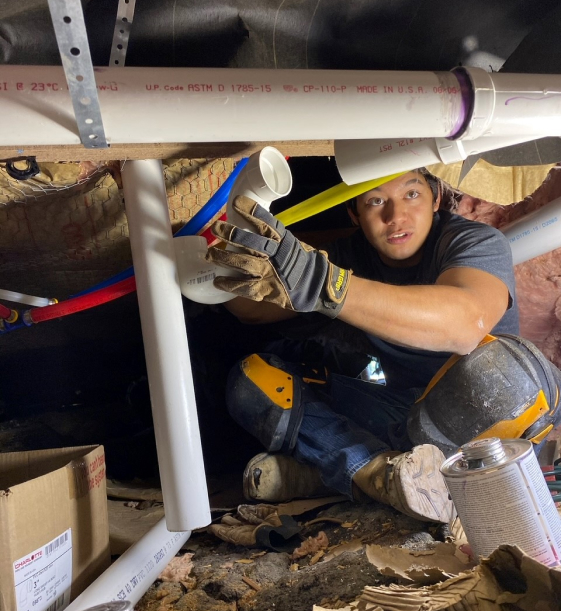
Once the system is assembled, we flood-test with a hose. The goal is not just to see it run, but to watch the cycle duration, verify check valve sealing, and walk the discharge path for leaks or backwash. A short run time with frequent starts means the pit is too small or the float range is too tight. We adjust before we pack up.
Cost ranges and what drives them
Price varies by home and scope, but most sump pump installations by the affordable Sosa Plumber Georgetown team fall into predictable bands:
-
Basic installation: For a straightforward basin, 1/3 to 1/2 HP submersible, check valve, and discharge line to exterior within 15 to 25 feet, projects often land between 1,400 and 2,400 dollars.
-
Interior perimeter drain add-on: If we saw-cut a narrow perimeter channel, install drain tile, and tie it into the pit, expect 3,000 to 6,500 dollars depending on footage and finish restoration.
-
Backup systems: Battery backup packages typically add 800 to 1,600 dollars including the battery and charger. Water-powered backups are in a similar range, sometimes slightly lower if the water line is close.
-
Crawlspace challenges: Tight or low-clearance crawlspaces add labor. Plan for an additional 10 to 25 percent, especially if we must trench and haul soils by hand.
-
Finish restoration: We can patch concrete, but if you have specialty flooring, trim, or built-ins, the finish trades are a separate cost. We coordinate with your contractor when needed.
We provide fixed bids after a site visit. If you are shopping for Sosa Plumbing near me Georgetown and comparing quotes, ask what brand and model is included, whether the check valve and unions are part of the price, and how discharge termination is handled. A low price that dumps water at the foundation is not a bargain.
Common pitfalls we see in DIY or rushed installs
The calories you save on day one often come back as headaches on day 100. We see the same mistakes repeatedly when we get called to rescue a sump that never worked right.
Short-cycling floats wear out motors. If the pump kicks on every 20 to 30 seconds during a heavy rain, the pit or float travel is too small. The solution is either a wider basin or a float with a longer travel. We prefer a basin that gives you a 30 to 60 second run time and a couple minutes off time, which keeps motor temperatures sane.
No unions means no service. When rigid pipe runs straight off the check valve with no union, replacing the pump becomes a hack job with a saw. We always include a union for clean disconnection and a ball valve if the system shares a manifold.
Discharge grading ignored. A line with bellies traps water and ice. In our rare winter cold snaps, that can crack fittings. We support long runs, and for exterior sections we pitch lines slightly and protect exposed sections with insulation if they cross shaded north walls.
Improper power. Daisy-chaining multiple pumps, a freezer, and a shop vac on one GFCI causes trips at the worst times. We separate circuits and test GFCI behavior with the pump under load.
No lid or poor sealing. An open pit pulls humid air into the space and can let radon or soil gases enter. A sealed lid with grommets for cords and pipes reduces odors and humidity.
Maintenance schedule that keeps you out of trouble
A well-installed system does not ask for much, but a few minutes twice a year pays for itself. Homeowners can handle basic checks, and the trusted Sosa Plumbing company can take on annual service if you prefer.
-
Spring check: Before storm season, pour two to three buckets of water into the pit. Watch the on and off points and listen for smooth operation. Verify that the check valve closes without a water hammer thud. If you have a battery backup, test it by unplugging the primary for a minute.
-
Fall check: Clear leaves and mulch around the discharge point. If an emitter box is present, open and remove debris. Check that the exterior run has not been buried by landscaping changes.
We also suggest replacing the check valve every 5 to 7 years and the primary pump around the 8 to 12 year mark, assuming normal duty. Backup batteries usually need replacement by year five even if they seem fine.
If the https://s3.us-west-1.amazonaws.com/sosa-plumbing-services/Plumber-Georgetown-TX/uncategorized/emergency-plumber-sosa-georgetown-quick-fixes-for-leaky-faucets.html pump starts to run louder, if the float hesitates, or if cycles lengthen suddenly, schedule a service call. A quick inspection catches a failing bearing or a sticky float before a storm exposes the weakness.
Special cases: crawlspaces, slab-on-grade, and historic homes
Not every home offers an easy basement corner for a sump basin. We adapt to structure and age.
Crawlspaces benefit from pairing a sump with a heavy vapor barrier. We grade the soil slightly toward the basin and lay down 10 to 20 mil poly sealed to piers and walls. This combination tames both liquid water and vapor. In some pier-and-beam homes off Austin Avenue, we have added a second auxiliary pit at the opposite end, connected by a shallow drain line, so water has two collection points.
Slab-on-grade homes with a below-grade media room or sunken living area can still use a sump if an interior French drain is installed beneath the slab edge. It takes careful saw cutting and dust control. We phase work so only short spans of slab are open at a time to protect the remaining structure.
Historic homes require gentle methods. We avoid aggressive trenchers, hand-dig near fragile stone footings, and choose discharge routes that preserve sightlines. When the landscape or porch footings block easy routes, we may core through a rim joist bay and drop along the siding with painted conduit to a side yard. The goal is a dry structure without scars.
Health and air quality benefits you actually feel
People call us to stop water, but they thank us later for the smell disappearing. A damp basement smells like old cardboard for a reason. Mold and bacteria colonize dust and organic debris, releasing VOCs that drift upstairs. By removing standing water and lowering humidity, a sump system chokes off that growth. Pairing the system with air sealing and a small dehumidifier, you can bring a 70 percent relative humidity space down into the mid 40s. That change protects wood floors above and keeps mustiness out of closets. Families with allergies or asthma notice the difference within a week.
Insurance, warranties, and resale value
Insurers love documented risk reduction. While most policies exclude groundwater, companies look favorably on mitigation. We provide invoices and photos that you can add to your records. Some carriers offer small discounts for backup systems with alarms. Do not expect them to cover wear-and-tear on a pump, but if a covered event damages the system, documentation smooths claims.
From a resale angle, a clean, well-installed sump reads as a proactive upgrade. Buyers in the best sosa plumbing services Georgetown TX market often bring inspectors who know to look. A sealed lid, tidy discharge, and labeled circuits tell a story of professionalism. The opposite, a crooked PVC through a basement window, scares people. Details matter.
We register manufacturer warranties for pumps we supply, typically three to five years against defects for reputable brands. Our labor warranty covers workmanship for a defined period that we put in writing on every proposal.
When to call a pro and how to choose one
If you have persistent water entry, visible pooling, or a sump that runs for hours after rain, it is time to bring in a professional. The risk with DIY is not incompetence, it is blind spots. Knowing where the footing lies, predicting a slab’s steel pattern before cutting, or reading a yard’s hydrology saves rework.
If you are searching for Sosa Plumbing near me or local Sosa Plumbing in Georgetown, vet companies with a few pointed questions. Ask how they determine pump sizing, whether they provide a detailed drawing of discharge routing, and https://s3.us-west-1.amazonaws.com/sosa-plumbing-services/Plumber-Georgetown-TX/uncategorized/sosa-plumbing-services-georgetown-fixture-repair-specialists.html how they handle dust. Ask for a project in your neighborhood you can drive by. A trusted Sosa Plumbing company should welcome transparency. At Sosa Plumbing Company Georgetown, we photograph each stage and provide a simple maintenance sheet at handoff. That habit keeps everyone accountable.
What sets Georgetown Sosa Plumbing Services apart
Experience is not just years, it is patterns recognized. After hundreds of sump pump installations and repairs across neighborhoods from Sun City to Old Town, we have learned the local quirks. Clay seams that weeps for days. HOA rules on curb emitters. How to route a discharge through a tight side yard without tripping mowers. We have also built a service model around quick response. When you call for an emergency plumber Sosa Georgetown after a storm, a live person triages the call, and our on-call tech rolls with the right pumps and couplings to stabilize the situation. That first hour can decide whether a room stays dry.
Price matters too. As an affordable Sosa Plumber Georgetown, we balance cost with durability. We do not upsell gold-plated gear you do not need, and we do not install disposable pumps that will fail in the first real test. The mid-tier cast iron pumps we favor offer the best life-cycle value, and we can show data from past jobs to back that up.
Finally, we are transparent about what a sump pump can and cannot do. If your foundation has structural cracks that leak under hydrostatic pressure, a pump alone is not the cure. In those cases we coordinate with structural pros to seal cracks and relieve pressure. If your lot grading sends half the block’s runoff toward your home, we design exterior drainage improvements. Honesty builds trust, and trust keeps our calendar full with referrals.
A brief case story from Berry Creek
A homeowner in Berry Creek called after two storms left a half inch of water along one wall of a finished basement. They had a small pedestal pump in a narrow bucket, noisy and barely keeping up. The discharge ran uphill to a side yard where it spilled into a mulch bed. We proposed a 24 inch basin with a 1/2 HP submersible, a new interior drain along 36 feet of the footing, and a discharge reroute to a curb emitter with two 45s to maintain flow. We added a battery backup and a sealed lid with an audio alarm.
On test day we simulated a high inflow with dual hoses. The new pump ran 55 seconds on, 2 minutes off, a healthy cycle. Two storms later, the homeowner sent a message: the alarm only chirped when we tested it, the basement stayed bone-dry, and the backyard no longer had a swamp by the roses. The old pedestal pump went into the scrap bin.
If you are planning a remodel, time the install early
Sump work is dirty work. If you are finishing a basement or converting a lower-level space, schedule the sump and any interior drains before drywall and flooring. We coordinate with general contractors to rough in pits and discharge lines right after framing. That timing minimizes dust risks to finishes and lets electricians provide a clean dedicated circuit. It also opens options for routing, since we can tuck lines into framed chases and plan for access panels rather than cutting into new walls later.
How to get started with the plumber in Georgetown Sosa services
A site visit tells us what we need to know. We bring a moisture meter, a level, and a camera to document conditions. You tell us your goals. Maybe you plan to add a home gym where the carpet must stay dry, or you simply want the crawlspace to stop smelling like wet cardboard. We produce a plan with options: basic pump only, pump plus perimeter drain, or a full system with backup and monitoring. The experienced plumber Sosa Plumbing Services Georgetown team explains the trade-offs in plain language so you can choose based on risk tolerance and budget.
Whether you searched for plumbing company Georgetown Sosa services or typed Sosa Plumbing near me on your phone after a storm, you will get a straight answer and a clean installation. Good work here looks simple when it is done. That is exactly the point. The pump sits quietly under a sealed lid. The discharge disappears into the yard. You forget about storms, and your home just stays dry.