
When Should an Athlete See a Chiropractor for Pain or Performance?
If you train hard enough to call yourself an athlete, you will eventually meet two things head on: pain and plateaus. The first one whispers at the start, then grows louder with each session. The second sneaks up when your effort stops turning into measurable gains. A good sports chiropractor lives in that space where small problems are caught early and the body is tuned for repeatable performance. The best time to seek help is rarely when you cannot walk. It is when patterns begin to drift, when recovery lags, or when a twinge keeps returning like a bad chorus.
I have worked with runners who could nail tempo sessions but limped the day after, lifters whose shoulders pinched at 90 degrees, and soccer players whose hamstrings always felt two steps behind. The common thread was not just pain. It was a system that needed recalibration. Chiropractic care for athletes is not a magic trick. It is a mix of assessment, hands-on treatment, and targeted homework that nudges joints, soft tissue, and the nervous system back where they work best.
Pain, performance, and the line between them
Athletes tend to push through discomfort. That is part of what makes you who you are. But there is a difference between expected training soreness and a problem that benefits from skilled hands.
Normal soreness shows up a predictable 24 to 48 hours after a new or intense effort, feels diffuse rather than sharp, and fades within a few days as the body adapts. Pain that needs attention behaves differently. It is asymmetric, it limits a position or a skill you could do last week, it wakes you at night, or it keeps returning in the same spot after you thought it was gone.
Performance complaints can be just as telling. If stride length shortens on one side at mile eight, if your bottom position in the squat drifts to the right, if your overhead mobility costs you speed in the pool, those are mechanical flags, even if you are not in obvious pain. This is where a sports chiropractor can help you sort signal from noise.
A quick decision guide athletes actually use
Here is how I coach athletes to decide when to book. Use it like a checklist before your next training block or race build.

- Pain changes your mechanics, not just your comfort level, for more than three sessions in a row.
- Range of motion loss is measurable, such as losing 10 degrees of hip rotation or being unable to turn your head fully while driving.
- Neurologic symptoms appear, like tingling, shooting pain down the leg that suggests sciatica vs lower back pain, or grip weakness after shoulder work.
- You have a recurring soft tissue complaint, such as the same calf or hamstring strain every season, despite smart training.
- You are healthy by the numbers but stuck on a plateau where mobility or stability looks like the bottleneck.
If you check one of these boxes, you are not fragile. You are being smart with timing.
What a sports chiropractor actually does for athletes
The public sometimes pictures a quick adjustment and you are out the door. In athletic care, that is not the whole story. A typical session weaves together several parts.
Assessment starts with your sport. A distance runner has different demands than a power hitter. We look at global patterns first, then at the joints that most influence your performance. Hip internal rotation for a sprinter. Thoracic extension for an overhead athlete. Foot stiffness for a lifter in deep dorsiflexion. We might include simple force or jump tests, movement screens that highlight asymmetry, and palpation to read tissue tone. If a red flag pops up - major trauma, suspected fracture, fever, true foot drop - you go to urgent care or a medical specialist first.
Treatment blends joint work and soft tissue care. Adjustments can free a stiff facet or rib that limits rotation. Mobilizations and instrument assisted soft tissue work help muscles slide again, not just stretch. Eccentric and isometric exercises restore tendon load tolerance. Neuromuscular reeducation teaches your system to own new positions under speed or fatigue. Taping and bracing buy you time during a taper or tournament. If your state and clinic allow it, dry needling can reduce trigger point activity in stubborn calves or glutes. The point is not cracking for its own sake. It is restoring clean inputs and outputs so your movement becomes efficient again.
Homework is where progress compounds. Two to four drills, not twenty, tied directly to your limiter. If your right hip drops on single leg stance, you might walk out with lateral hip isometrics, loaded hip airplanes, and a sprint drill that reinforces knee drive. You repeat them at the right dose until the pattern holds in training.
Conditions that respond well
Most athletic issues are not broken bones. They are joint restrictions, soft tissue overload, and movement control problems. These are the sweet spots for chiropractic care paired with rehab.
Lower back pain is a top reason athletes ask for help. For runners, I often see extension based back pain after long downhills or tempo runs. For lifters, it shows up during heavy pulls off the floor. The difference between back strain and disc pain matters. Strain tends to be localized, sore on contraction and stretch, and improves in days to a couple of weeks. Disc related pain may refer into the buttock or leg, worsens with prolonged sitting, and can create a directional preference where bending backward feels better than forward, or the reverse. A good exam sorts those patterns out. Can a chiropractor help lower back pain? In many cases yes, especially when treatment includes load management, core bracing progressions, and hip mobility work, not just adjustments.
Neck pain and headaches deserve attention when they limit sport skills or daily life. Overhead athletes who lose thoracic mobility often steal motion from the neck. Desk time compounds this. Can neck problems cause headaches? Absolutely. Cervicogenic headaches often refer from the upper cervical joints and suboccipital muscles. Manual therapy to the neck and upper back, plus scapular control drills, often provides relief. And if you ask why does my neck hurt after sleeping, it is often a mix of pillow height, pre sleep posture, and a stiff mid back rather than the mattress itself.
Sciatica like symptoms in athletes usually stem from irritated nerve roots at the lumbar spine, deep gluteal syndrome, or hamstring origin issues. How do I know if my pain is sciatica? Shooting pain below the knee, numbness or tingling, and cough or sneeze sensitivity raise suspicion. But a lot of so called sciatica is actually referred pain from the back or hip that never crosses the knee. A focused exam, repeated motion testing, and neuro screens make the difference. Can chiropractic adjustments help a pinched nerve? They can, when combined with nerve glides, traction or decompression when indicated, and careful exercise dosing.
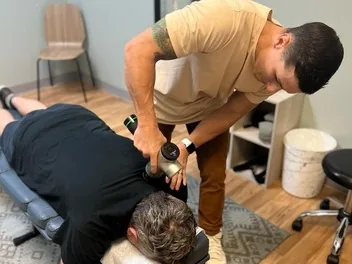
Shoulder pain shows up in swimmers, throwers, and lifters. Can chiropractic care help shoulder pain? Yes, by addressing thoracic extension and rotation, scapular mechanics, and rotator cuff load tolerance. Pure rest rarely solves recurrent shoulder impingement. Progressively loaded external rotation, serratus training, and posterior capsule mobility do.
Hip pain after exercise is common in field athletes and runners. Sometimes it is hip flexor tendinopathy after high volume kicking or sprint work. Other times it is deep hip pain from femoroacetabular impingement, which needs a careful plan and sometimes imaging. Tightness is the most overused word here. Often the hip feels tight because it is weak at end range. Strength at length is the fix.
For gym training, a chiropractor for a gym injury in Jacksonville FL will see a steady stream of wrist pain with handstands, adductor strains after heavy sumo pulls, and rib irritation with deep front squats. None of this means you stop training. It means you adjust the stimulus while the injured tissue catches up.
What if the pain started after a crash or sudden jolt?
Athletes drive to meets, practices, and gyms. Rear end collisions can ignite neck and back pain even in minor fender benders. Can a chiropractor help after a rear end collision? Often, yes, for soft tissue injuries like whiplash and joint restrictions that follow the jolt. How long after a car accident can neck pain start? Hours to several days is common. Why does whiplash get worse after a few days? Inflammation ramps up, protective muscle guarding kicks in, and small facet joint sprains reveal themselves when adrenaline fades.
If you train in Florida, there is a practical detail. Florida’s personal injury protection has a 14 day rule. How does Florida PIP work after a car accident? In simple terms, you must seek medical evaluation within 14 days to access your benefits. Does PIP cover chiropractic care in Florida? It can, when care is part of your accident claim. What happens if I miss the 14 day PIP deadline in Florida? You may lose access to those benefits. If you are in Jacksonville and wondering chiropractor or urgent care after a car accident in Jacksonville FL, urgent care is appropriate first if you have severe pain, suspected fracture, concussion, chest pain, or uncontrolled bleeding. Otherwise, a chiropractor trained in trauma evaluation can serve as an entry point, coordinate imaging if needed, and refer as appropriate. And yes, can I use PIP insurance for a chiropractor in Jacksonville FL is a question clinics handle daily.
Performance care when nothing officially hurts
Some of the best gains happen when you are not in crisis. Can chiropractic care improve mobility? It can, particularly when a joint is the rate limiter rather than a muscle. Picture a lifter stuck at parallel because the ankles will not dorsiflex. Manual joint work to the talocrural joint, soft tissue work to the calf complex, and loaded goblet squat holds often unlock the bottom position within a few sessions. The key is integrating that new motion under load so it sticks.
Runners ask about chiropractic care for runners with back pain, but a bigger play is improving rotation and hip extension so stride becomes economical. Even small changes matter. An extra 5 degrees of hip extension, multiplied by 170 steps per minute, saves energy. Cyclists who live in thoracic flexion can benefit from rib and mid back work that allows better diaphragmatic function. Overhead athletes gain speed when scapular upward rotation is efficient and the thoracic spine extends without borrowing from the lower back.
Posture is not a moral quality. It is a set of positions repeated often. Can a chiropractor help with posture? Yes, when treatment links joint mobility in the mid back and hips with strength in the lower traps, serratus, and deep neck flexors. Desk time matters, even for athletes. Why does my back hurt after working at a desk is a question I hear from people who train hard at 6 a.m. Then sit 10 hours. They feel fine during the workout, then stiff as wood later. Small changes help: a sit stand desk, walking breaks, 20 second extension drills, and car seat adjustments to prevent lower back pain while driving. Done consistently, these make your training stick.
What to expect at your first sports chiropractic visit
Athletes like plans. A well run first visit answers key questions quickly. What happens during your first chiropractic visit? Expect a detailed history, movement assessment tied to your sport, orthopedic and neurologic screens, and a clear summary of findings. Do chiropractors take X rays on the first visit? Sometimes, if trauma, suspected fracture, or red flags are present, or if imaging will change care. Many athletic complaints do not require immediate imaging. Does chiropractic care hurt? Treatment should not be painful. Some soft tissue work and new exercises can feel intense but should be tolerable and purposeful. How long does a chiropractic appointment take? First visits often run 45 to 60 minutes, follow ups 20 to 30, depending on the clinic. What should I wear to a chiropractic appointment? Bring or wear clothing you can move in, like shorts for lower limb work and a tank or sports bra for shoulder assessments. How many chiropractic visits do I need? For straightforward mechanical pain, three to six visits over two to four weeks is a common starting range, paired with home work and training modifications. Chronic or complex cases take longer.
To make that first session count, bring training logs, note what makes symptoms better or worse, and be ready to demo the movement that triggers your issue. If you are a Jacksonville athlete searching sports chiropractor Jacksonville FL questions or back pain chiropractor questions Jacksonville FL, call ahead to make sure the clinic treats your sport, not just general pain. Ask how they blend manual therapy with exercise, whether they communicate with your coach, and how they progress return to sport.
A short, athlete friendly prep list for day one
- Write down your top two goals, one pain related and one performance related, such as run a 10k without hip pain or snatch bodyweight again.
- List two or three movements that trigger symptoms and two that feel fine.
- Bring shoes, braces, or gear tied to your sport, including orthotics or lifting shoes.
- Note your training schedule for the next four weeks so the plan fits your calendar.
- Ask about expected timelines, red flags to watch, and how to modify training in the short term.
Prevention is not passive
Athletes often ask how to prevent sports injuries with chiropractic care. Prevention is not just a warm up. It is a cycle that includes testing, small but regular manual care when a joint or tissue drifts, and strength work to hold new ranges. The most effective routines are not long. Ten minutes before training that targets your two biggest limiters beats thirty minutes of random stretching. Runners benefit from calf raises through full range, hip airplanes, and mid back rotation. Lifters maintain shoulder health with face pulls, bottom up carries, and thoracic extension over a foam roller. Field athletes keep hamstrings honest with Nordic curls and tempo runs that teach smooth acceleration and deceleration.
Recovery tactics matter more than most athletes want to admit. Sleep is still king. Hydration and protein timing are straightforward wins. If your back pain keeps coming back, but only on stressful weeks with poor sleep, do not blame a single rep. Fix the ecosystem.
Two quick snapshots from real practice
A collegiate 400 meter runner came in three weeks before conference with left sided back pain that flared after block starts. Exam showed limited left hip internal rotation and a stiff left sacroiliac joint. We used joint mobilization, hip internal rotation lifts, isometrics for the obliques, and a small walk in chiropractor Jacksonville, FL tweak to block setup. Within two sessions, pain dropped from a 6 to a 2, and she raced with no restriction. The key was not chasing the back. It was restoring rotation she needed to tolerate acceleration.
A competitive CrossFitter could not press overhead without a pinch. Thoracic extension was limited and his rib cage flared at end range. Two weeks of thoracic mobilization, scapular upward rotation drills, and a pause in kipping let his shoulder calm down. The adjustment that unlocked his mid back made his overhead position feel weightless. But the lasting change came from loading the new range with kettlebell presses and tempo negatives.
When you should choose urgent care or a different specialist
Not every problem belongs in a chiropractic clinic first. If you have trauma with suspected fracture or dislocation, loss of bowel or bladder control, true progressive weakness, fever with back pain, or chest pain, you need emergency care. Post concussion symptoms or a suspected stress fracture deserve medical evaluation and sometimes imaging. A good sports chiropractor will make that call quickly and refer you.
On the other hand, many soft tissue injuries, joint restrictions, and overuse problems fit comfortably in sports chiropractic care. Can chiropractic care help with soft tissue injuries after a crash or a tough training block? Yes, when combined with a smart return to load. If imaging shows a full thickness tendon tear or you have instability that does not respond to rehab, a surgical consult might be the right next step.
Costs, insurance, and expectations in Jacksonville FL
How much does a chiropractor cost in Jacksonville FL varies. Cash rates for sports focused care often range from 60 to 150 dollars per visit depending on visit length and provider credentials. Many clinics are in network with major insurers, though sports performance sessions may be cash based if there is no covered diagnosis. If you are dealing with an auto accident, does car insurance pay for chiropractic treatment after an accident depends on your policy and, in Florida, on PIP rules. PIP chiropractor Jacksonville FL questions come up often, and front desks are used to verifying benefits. Do I need a referral to see a chiropractor after a car accident in Florida? Generally no, though your insurer might require initial evaluation by certain provider types for billing reasons. manual therapy chiropractor Jacksonville, FL Call and ask before your first visit.
How to get the most out of care
Athletes who improve fastest share habits. They show up early and warm up with the drills prescribed. They ask what to do if pain spikes between visits. They protect their key sessions and adjust accessory work rather than trying to be a hero. They do not stop moving. They change how they move until the tissue tolerates more. And they keep the two or three drills that fixed them in their routine twice a week after discharge, not as punishment, but as insurance.
Final thoughts from the training floor
If you are waiting for absolute proof before you seek help, you will chiropractor Jacksonville, FL always be late. The body leaves hints. If your 5k pace drops when your thoracic spine gets tight, if your front rack pinches each Monday but not Friday, if your hamstring whispers every time volume climbs, that is your moment. When should an athlete see a chiropractor? Sooner than you think, especially when the goal is to keep training rather than to rehab from scratch. The right provider will meet you where you are, treat what they find, and build you a plan that respects your sport, your schedule, and your drive. That is how pain becomes data, and data becomes better performance.
Full Swing Healthcare - Injury & Sports Care Jacksonville 1. Address: 13770 Beach Blvd #4, Jacksonville, FL 32224 2. Phone: (904) 539-3352 3. Hours: M - F: Thursday: 9:00 AM – 7:00 PM Friday: 9:00 AM – 1:00 PM Saturday: Closed Sunday: Closed Monday: Closed Tuesday: 9:00 AM – 1:00 PM Wednesday: 9:00 AM – 7:00 PM 4. Full Swing Health offers the following services: Chiropractic Care Acupuncture Shockwave Therapy Myofascial Cupping Myofascial Scraping (IASTM/Graston Technique) Massage Therapy Dry Needling Athletic Recovery Family Wellness Care Auto Injury Treatment Work Injury Treatment Prenatal Chiropractic Care Postpartum Recovery Care The clinic also treats conditions such as back pain, sciatica, neck pain, whiplash, herniated discs, headaches, plantar fasciitis, and sports injuries.